
Archive
Long Hours at the Office? Avoid Back Pain with These 7 Tips
Leave a Comment
As we trudge through the long winter months, do you find yourself spending more and more time at your desk?
“People are generally less active in the winter months,” says Ajax chiropractor Dr. John Noble. “And sadly for many, this can mean more time at the office, hunched in front of the computers.”
Unfortunately, back pain in the workplace is common, and shouldn’t be ignored. Work-related back pain is often a sign that either your environment or your posture and movements should change. Age, desk setup, stress load and the type of manual tasks you engage in all play a huge role in your back health. But at the end of the day, no matter how successful or passionate you are, your health matters most.
Did you know?
Back pain is the #1 work-related injury. Hunching over a computer is one of the main reasons that four out of five women end up with back pain at some point in their lives.
Keep your back healthy at work
Here are some ways to reduce the risk of back and neck pain:
1. Sit within reach
Your torso should be about an arm’s length away from the monitor, which should be 2 to 3 inches above eye level.
2. Pick the right chair
Pick an adjustable chair that allows your lower back to rest against a lumbar support. Then tilt the back of the chair so it’s very slightly reclined.
3. Keep your mouse close
Ideally, it should be placed right next to your keyboard so you don’t overreach or twist your shoulder, arm, or wrist when clicking.
4. Take breaks
No deadline is worth an injury. Getting up at least once an hour—to go to the bathroom or just do some shoulder rolls—reduces pressure on spinal disks and boosts circulation.
Payoff: you’ll be more limber and less stressed.

Exercises/Stretches to help alleviate your back pain at work
5. Straighten up
- Standing tall, feet together, align your ears, shoulders, hips, knees and ankles.
- Pull your belly button in towards your spine.
6. Twist and sway
- Stand with feet wider than shoulder width apart and gently rotate your core from side to side.
- Let your arms flop loosely and shift your weight from knee to knee, breathing calmly for 15 seconds.
7. Shake it out
Shake limbs loosely for 15 seconds on each side.
Don’t be a slave to the office or let the winter months keep you from doing the things you love.
The wellness team at Pickering Village Chiropractic & Massage can help you manage your condition-related pain during the winter months, and help you prevent musculoskeletal conditions if you work outdoors.
We provide our patients with more than just chiropractic and massage therapy services, but also the know-how to build better personal wellness habits so you can be at your best for work or play, every day.
To book an appointment or learn more about the chiropractic and therapeutic massage therapy services available at our clinic, call 905-427-3202.
With content from the Ontario Chiropractic Association.
How to Treat Strains and Sprains
Leave a Comment
As Southern Ontario braces for another major snowstorm, chiropractors and other health professionals prepare for the inevitable: more patients with injuries from slipping and falling on the ice.
Assuming your injury isn’t serious enough to warrant a trip to the ER, you may be wondering how to treat your new sprain or strain.
Should you apply ice? Or is it heat? What else can you do?
The best treatment for a sprain or strain is with the “RICE” method, an acronym which is helpful to remember when you have an acute injury. Please note, if you are unsure of the severity of your sprain or strain, you should talk to your doctor before beginning any treatment or rehabilitation.
Remember P.R.I.C.E.
These five simple rules will help speed up your recovery in the first 48-72 hours of a sprain (ligament) or strain (muscle) injury.
P is for PROTECTION.
Protect the injured area from sustaining any more damage.
R is for REST.
Allow the injury time to heal.
I is for ICE.
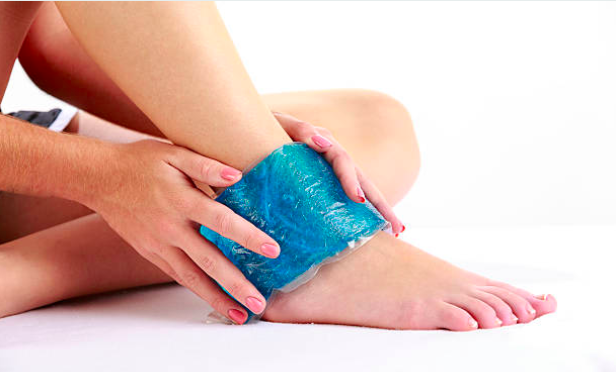
Ice should be applied to an injured area as soon as possible. Use the 10/10/10 method of ice application: 10 minutes of ice; followed by 10 minutes of rest without ice; followed by 10 minutes of ice again. Do not apply heat. Ice works to reduce pain and inflammation to your injured muscles, joints and tissues and may even slow bleeding if a tear has occurred.
C is for COMPRESSION.
Use a tensor bandage to wrap the injured area. When wrapping, begin at the end furthest away from the heart.
E is for ELEVATION.
If possible, raise the injured area above the level of the heart, especially at night, by putting a pillow under the injured area.
After the first 48 hours, slowly start to use the injured area again and continue icing for another day.
Don’t let the winter months keep you from doing the things you love, or keep you indoors in pain.
The wellness team at Pickering Village Chiropractic & Massage can help you manage your condition-related pain during the winter months, and help you prevent musculoskeletal conditions if you work outdoors.
We provide our patients with more than just chiropractic and massage therapy services, but also the know-how to build better personal wellness habits so you can be at your best for work or play, every day.
To book an appointment or learn more about the chiropractic and therapeutic massage therapy services available at our clinic, call 905-427-3202.
With content from the Canadian Chiropractic Association.
The Key to Staying Active This Winter: Plan Ahead!
Leave a Comment
Is watching Netflix your go-to activity during the winter months? It’s no surprise that when it gets cold outside, we tend to spend more time indoors doing sedentary activities and it can be difficult to stay active.
What’s the answer? Try planning your activities by setting aside time in your schedule — a few days a week — to make sure you’re getting the activity you need.
How much activity do you need?
To receive the health benefits from exercise, adults need a total of 2.5 hours of activity spread across the week, in bouts of ten minutes or more. These activities need to be moderate-to-vigorous intensity aerobic activities. Moderate-intensity physical activities include brisk walking or bike riding. Generally, you know your activity is moderate-intensity if you sweat a little and breathe harder than when you’re moving about day-to-day. Vigorous-intensity activities include jogging or cross-country skiing, and you’re likely to find yourself sweating and feeling out of breath.
Here are a few tips to help keep you motivated to stay active during the winter months:
Plan activities ahead.
When activities are in your calendar, you’re less likely to forget them. Preparedness also helps set good habits.
Find a fun local activity, like snowshoeing, skiing, skating, or cross-country skiing.
Dress in layers. Insulate your body. When you can keep your body warm, it’s easier to continue being active outside.
Use your daylight hours.
It’s easier to stay outside while it’s still light out. It’s easy to miss out on activities when you start them too late in the day.
Find indoor activities at your local community centre.
This could be aerobics classes, badminton, basketball, or yoga classes.
Climb stairs.
Deliberately add more steps to your day. Consider going up and down a flight in your home, the mall, or an office building more than once over the course of your regular daily activities. As little as five minutes can make a huge difference for your health.
Go online to find more motivation.
There are plenty of free exercise videos you view online, including dance, step, aerobics, or Pilates.
Sign up for a fun run.
You can often find non-competitive “fun runs” in your community that are usually between 5 and 10 kilometres. You can invite friends and family to join in!
Find an activity buddy.
Find someone willing to commit to being active as often as you are, and set a plan. That could be planning to meet for morning walks or afternoon workouts. Having a friend keeps you accountable.
Stay hydrated.
Whatever your activity level is, remember to stay hydrated. It is easy to forget to drink water when it’s cold out, but your body needs just as much hydration in a snowstorm as it does in a heatwave.
Stay motivated.
Most importantly, stay motivated. Revisit your goals (or look for tips to set new ones) to make sure you’re still on track. Plan ahead and make sure you can envision your goal as you look ahead towards the finish line.
To get help on setting activity goals based on your specific musculoskeletal needs, ask your chiropractor about what activities are right for you.
The wellness team at Pickering Village Chiropractic & Massage encourage you to improve your overall health by making exercise a part of your daily routine. If you want to learn more about managing your health with exercise, contact our clinic today at 905-427-3202.
With content from the Canadian Chiropractic Association.
Make a New Year’s Resolution to Stay Active
Leave a Comment
With the holiday season behind us, it’s time for another familiar tradition: setting our goals and resolutions for the New Year.
While many of us place weight loss, healthy eating and getting fit at the top of our to-do list at the beginning of each year, it can be easy to lose sight of our goals during the long winter months. After all, curling up with a good book or binge-watching a series on Netflix is much more enticing than heading out to the gym after a long day at work.
Aside from keeping your New Year’s resolution, there are a variety of reasons why you should make exercise a priority in your life. Here are a few important reasons for you to stay active:
It helps relieve low back pain
Exercise has been shown to have a positive long-term effect on low back pain. Core strengthening exercises, especially, have been shown to be very effective in improving the function of your back.
It improves bone health
Current evidence has shown that exercise can increase bone density and decrease the risk of falls and fractures in the elderly. Studies have also shown that exercise is comparable to medication in improving the day to day functioning of people with osteoarthritis.
It helps prevent obesity
Obesity is often connected to the development of many life-threatening illnesses (e.g., diabetes or high blood pressure). There is strong evidence showing that exercise is important for preventing weight gain as well as keeping your body weight stable after you’ve shed some pounds.
It helps improve your mental health
Physical exercise has been shown to have a positive effect in the long-term management of psychological symptoms, including depression, anxiety, schizophrenia, and chronic stress!
It helps manage diabetes
Diabetes is a common illness affecting approximately 2.5 million Canadians, with over 200,000 cases being diagnosed every year. Researchers around the globe have all found that exercise is one of the pillars of managing diabetes along with diet.
It prevents your risk of cancer and cardiovascular disease
Cancer and heart disease are the leading causes of death in Canada. There is more and more evidence showing that exercise can help protect you from developing cancer in the colon, breast, uterus, and prostate. Studies have also shown that exercise lessens your risk of developing heart disease because it helps reduce the amount of fats and cholesterol in the body (both play a role in damaging your arteries).
It can help improve brain health
Studies have shown that individuals who exercise regularly have a decreased risk of developing dementia. Exercise has also been shown to improve balance and function in individuals with Parkinson’s disease.
The wellness team at Pickering Village Chiropractic & Massage encourage you to improve your overall health by making exercise a part of your daily routine. If you want to learn more about managing your health with exercise, contact our clinic today at 905-427-3202.
With content from the Canadian Chiropractic Association.
How Exercise Helps Fight the Winter Blues
Leave a Comment Ah, the long days of winter!
As we approach the winter solstice — with shorter days and colder temperatures — it’s tempting to stay indoors and do things that bring us comfort, like read books and watch movies. Unfortunately, however, our favourite winter activities often leave us sedentary.
When we are not as active as we are in the summer, it affects the balance of chemicals produced in the body that impacts how we feel pain and pleasure: our endorphins.
Endorphins are produced by the body to respond to things like stress, fear, or discomfort. They interact with the parts of your brain responsible for our emotional responses and sensitivity to pain. Endorphins are responsible for our feelings of pleasure and are involved in our built-in reward system linked to eating, drinking, sexual activity, and maternal behaviour.
Fortunately, there are a few things you can do to help boost the level of endorphins in your body. One of those things is exercise.
Exercise encourages the body to produce more endorphins.
For example, sometimes runners experience a “runner’s high” level of vitality after a workout. The same experience can be had for anyone after an extended period of physical exercise. There are other benefits to working your body physically: exercise can give you more energy throughout the day, allowing you to sleep better at night and feel more relaxed. It also helps the brain repair and recover, reduces inflammation in the body, and helps you feel calm and have an overall sense of well-being.
The good news is that you can replicate these positive sensations by taking steps to add a bit more exercise into your day. Any activity leaving you out of breath for bouts of 10 minutes or more throughout the week can help you fend off the winter blues.
Other ways to boost endorphins
It’s not just exercise that helps your body boost endorphins: regular meditation, yoga, and tai-chi helps to decrease stress hormones and increase endorphins. Not only that, simple pleasures such as love, laughter, sunshine, and chocolate all increase endorphins as well.
Take care of yourself this winter.
There are lots of ways to make the short winter days a little brighter. The wellness team at Pickering Village Chiropractic and Massage encourages you to make your physical and mental health a priority over the long winter months.
We provide our patients with more than just chiropractic and massage therapy services, but also the know-how to build better personal wellness habits so you can be at your best for work or play, every day.
To book an appointment or learn more about the chiropractic and therapeutic massage therapy services available at our clinic, call 905-427-3202.
With content from the Canadian Chiropractic Association.
Learn How to Lift Your Luggage Properly to Avoid Injury — and Disappointment! — on Your Next Vacation
Leave a Comment The holiday season is upon us and for many, that means heading out of town to visit friends and family, or perhaps hopping on a plane to a sunny destination.
In the flurry of packing for a vacation or family visit, it’s easy to get carried away and pack everything but the kitchen sink into your suitcase and carry-on.
“Over-packed luggage and improper lifting and carrying techniques are common causes of injury to the back, neck and shoulders,” says Ajax chiropractor Dr. John Noble. “The good news is that many of these injuries can be easily prevented.”
Follow these tips and help take the pain out of your next vacation:
How to Choose Your Luggage
- When shopping for new luggage, look for a sturdy, light, high-quality and transportable piece. Avoid purchasing luggage that is too heavy or bulky when empty.
- Choosing a bag with wheels and a handle can go a long way to lighten your load.
- A good quality backpack with adjustable, padded shoulder straps and a waist strap makes an ideal carry-on because, when worn properly, backpacks can evenly distribute weight.
How to Pack Your Luggage
- Over-packing is an easy pitfall, but consider that the larger and heavier the luggage, the more susceptible a traveller is to neck, back and shoulder injuries. Try to only pack what you absolutely need.
- When possible, place items in a few smaller bags, instead of one large luggage piece.
- Ensure your carry-on luggage does not weigh more than 10 to 15 per cent of your body weight.
- Keep the contents of any carry-on luggage to a minimum, pack heavy items at the bottom of the bag and make efficient use of the bag’s pockets.

How to Lift and Carry Your Luggage
Lifting your luggage can’t always be avoided, even if your luggage has wheels. But practising safe lifting techniques can substantially reduce your risk of injury.
- Move slowly and, whenever possible, break the action into smaller parts. For instance, when loading a suitcase in the trunk of a car, try lifting it first onto a chair or step-stool, then lifting it into the trunk. Similarly, when placing luggage in an overhead compartment, first lift it onto the top of the seat.
- When lifting your luggage, first get close to the load and stand with your feet shoulder-width apart.
- Bend at the knees and let your leg muscles, rather than your back, do the lifting.
- Hold the load close to your body.
- Avoid twisting. Instead, turn your feet in the direction you are headed and turn your entire body in that direction.
- Do not carry bulky luggage for long periods of time. Make sure to check heavier items when travelling rather than carrying them for the duration of the trip.
- Try to carry light pieces in each hand rather than a single heavy item on one side.
- If using a backpack, use both shoulder straps and the waist strap, and adjust them to minimize the bag’s movement.
- If using a duffel or shoulder bag, switch sides often to reduce strain.
If you’re experiencing neck, shoulder or back pain, consider visiting the chiropractic and massage therapy team at Pickering Village Chiropractic & Massage. We help our patients build better pathways to overall wellness, as well as provide relief from back pain and muscle aches. Contact our clinic today at 905-427-3202.
With content from the Ontario Chiropractic Association
Help Prevent Back Pain with These Five Exercises
Leave a Comment
Earlier this month in our post Five Myths About How to Manage Back Pain, we discussed the importance of staying active and ensuring exercise is part of your daily routine.
We all have different pain triggers affecting our low back. Improper spinal movements, a fall, sports injuries and other muscle strains can have an impact on our everyday lives. Obviously, preventing those injuries — where possible — is key.
In this video, the Ontario Chiropractic Association demonstrates five easy exercises to help prevent and potentially reduce low back pain.
Just remember, you may need more stability while others may need more mobility, so it’s important to check in with a chiropractor to make sure these exercises are right for you!
Diaphragmatic Breathing
- Start by laying on your back with knees bent.
- Place a hand on your upper chest and the other over your belly. This will allow you to feel the movement of your diaphragm as you breathe in and out.
- Breathe in slowly through your nose so that your belly expands out against your hand. The hand on your chest should remain as still as possible.
- As you breathe out, gently contract your abdominal muscles inwards as you exhale, keep the hand on your upper chest as still as possible.
Cat and Camel
- Start on the floor in a quadruped position, this is a tabletop position, with hands on the floor under your shoulders and knees on the floor under your hips, toes facing down and turned under.
- Inhale deeply as you round your spine toward the ceiling, like a cat arching its back.
- Then exhale, tighten your abdominals and drop your chest toward the floor as you lift your head slightly and arch the top of your head back towards your tailbone.
Brettzel
- Lie on your back so your body forms a straight line with the arms in an extended T position.
- As you bend your left leg up to the centre of your body, reach your right hand up to rest on top of the left knee, and slowly pull the knee down across your body towards the right side of the floor. Keep the right leg long and extended on the floor.
- Now you are ready to begin the twisting torso stretch and breath work. Lift your extended left arm up and bend it against your left side, place your left hand on your belly. Now slowly rotate your left shoulder up off the floor and then back down while inhaling and exhaling.
Dead Bug Progression
- Lie on your back with both arms reaching up, knees are bent with feet flat on the floor.
- Lift your legs up one at a time, and position your hips and knees in a 90° angle.
- Take a slow diaphragmatic breath, then exhale, brace your core and flatten your low back to the floor.
- Slowly lower your right arm and left leg at the same time, exhaling as you extend them straight out and pause for a second before slowly return to the starting position as you inhale. Repeat with the left arm and right leg. Alternate this movement in a slow fluid motion.
Bird Dog
- Start on the floor in a quadruped position, a tabletop position, with hands on the floor under your shoulders and knees on the floor under your hips, toes facing down and turned under. Find a neutral spine position – you back should be relatively flat, your neck and head in general alignment.
- Actively engage and brace the core to avoid any arch in the low back, extend your opposite arm and leg up and away from your body, until they are in line with your torso and parallel to the floor. Being mindful not to twist the back and pelvis when you are in this extended position, hold for 5-10 seconds.
- Slowly return to starting position and repeat on the opposite sides.
If you’re experiencing back pain, consider visiting the chiropractic and massage therapy team at Pickering Village Chiropractic & Massage. We help our patients build better pathways to overall wellness, as well as provide relief from back pain and muscle aches.
Contact our clinic today at 905-427-3202.
With content from the Ontario Chiropractic Association
Tips for Avoiding Slips and Falls this Winter
Leave a Comment
Baby, it’s cold outside! And as we know, what starts off as a wet sidewalk or driveway can quickly turn into a sheet of ice.
Whether you’re going outside for some exercise, running an errand, or simply getting to and from your car, winter walking can be hazardous.
“Each year around this time, we start seeing an increasing number of patients who have suffered a fall on the ice,” says Durham Region chiropractor Dr. John Noble. “Our chiropractic and massage therapy team are able to offer guidance and provide care, but ideally it would best if the fall could be avoided!”
There are some precautions you can take to make sure you get to your destination safely. Here are eight ways to avoid a slip and fall on snow or ice:
Choose the right footwear
There are some great options for winter boots that provide slip-resistance.
Look for these features: rubber soles, non-slip tread.
Plan ahead
Give yourself extra travel time so you can walk without being rushed.
Don’t be distracted
Avoid walking and using your phone at the same time.
Be on the lookout for ice
Avoid icy patches when possible. When in doubt, assume that all dark and wet pavement surfaces are slippery.
Be prepared
If you don’t have salt for your stairs, driveway, or walkway, use sand or non-clumping cat litter to sprinkle on icy surfaces outdoors. If possible, only walk on paths that receive maintenance. Don’t take shortcuts where snow isn’t regularly removed
Use support
Use handrails when available and steady yourself on the door frame of your car when getting in and out of a vehicle.
Don’t compromise your balance
Avoid carrying items in your arms as that may cause you to be unbalanced. Walking with your arms swinging at your sides is the best way to maintain balance. Make sure to keep your hands out of your pockets to help with balance and walking posture (don’t forget your gloves).
Walk like a penguin
When the terrain is super slippery, try practising these “penguin-like” techniques for stability:
- Keep your feet “flat-footed” (place your whole foot down at once—this also slows your walking speed)
- Take short strides or shuffle your feet forward
- Keep your knees slightly bent and feet pointed out. Lean forward slightly
Make sure to check for weather updates before you head out! If you have experienced a slip or fall, our Pickering massage therapy and chiropractic team can help.
Call the Pickering Village Chiropractic and Massage Clinic for an assessment with Ajax chiropractors Dr. John Noble or Dr. Mark Fera, or to book a therapeutic massage with registered massage therapists Jessica Raedisch or Rolf Castanheiro.
With content from the Canadian Chiropractic Association
Five Myths About How to Manage Back Pain
Leave a Comment
The older you get, the greater your chance of experiencing back pain. In fact, it’s probably safe to say that most people will experience low back pain at one point in their lives.
Over the years, you may have heard a few theories about what actually causes low back pain and how to fix it. But do you have the right facts?
Here are some common myths surrounding back pain that you may have heard:
1. This pain is so intense, I should probably head straight to the emergency room.
Evidence shows that most low back pain cases are manageable and do not require an emergency visit. Go to the emergency room if you are experiencing a loss of sensation in the saddle area or you have lost bowel or bladder control. Otherwise, your best first step is to find a musculoskeletal expert such as a chiropractor to diagnose and treat the cause of your low back pain. If the cause of your pain is serious enough to warrant the emergency room, these specialists will immediately send you there.
When pain affects your quality of life you want help today, not tomorrow. Pickering Village Chiropractic & Massage has extended hours, and our staff will do their best to get you in today. Call us at 905-427-3202 to book an appointment.
2. If I’m in a lot of pain, there must be a lot of damage.
Pain is a sensation that acts as a warning system for your brain. Many things can cause that warning system to go off. A musculoskeletal expert can help you figure out if your pain is related to your joints, muscles, tendons, ligaments or nerves. It’s important to remember that intense pain doesn’t necessarily mean that there is significant damage.
3. I just need to stretch my back.
Before you stretch, it’s important to get checked out to see if stretching is the right thing to do. Depending on the reason your back is hurting, certain stretches can make things worse. For example, if you have a disc problem, then you may want to avoid stretches that flex the spine and put additional pressure on the discs. A chiropractor can help you get to the root cause and show you which exercises and stretches will help.
4. I need an X-ray, CT or MRI to figure out why I have back pain.
The reality is that most causes of acute low back pain will not show up on an X-ray, CT or an MRI. A qualified healthcare provider is trained to know when you should have diagnostic imaging done, and they have a series of other tests they can do to help you get to the bottom of what is going on.
5. Now that my back pain is gone, I can stop doing my exercises.
Once the pain stops, many people stop doing the things that helped them get rid of the pain. It is important to make healthy back care and exercise a part of your regular routine. Otherwise, your back pain is likely to return.
If you’re experiencing back pain, consider visiting the chiropractic and massage therapy team at Pickering Village Chiropractic & Massage. We help our patients build better pathways to overall wellness, as well as provide relief from back pain and muscle aches. Contact our clinic today at 905-427-3202.
With content from the Ontario Chiropractic Association
One in Every Three Canadians Over the Age of 65 Will Experience a Fall
Leave a Comment Falls are all too common in our aging population, with 1 in every 3 Canadians over the age of 65 experiencing a fall. The most common injuries from those falls include fractures to the hips, wrists and pelvis.
Falls can swiftly take away the sense of independence and confidence that allows a senior to fully enjoy their life. A senior who’s suffered an injury from a fall knows the dramatic impact it can have not just physically, but psychologically.
Call Pickering Village Chiropractic and Massage at 905-427-3202 to make an appointment to test your steadiness, balance and strength.
Here are some easy tips and techniques anyone can use to help reduce the risk of injury as a result of a fall.
Reduce clutter in the home
Maybe it’s time for some fall cleaning. Getting rid of loose articles such as rugs prevents you from slipping or tripping in your home. Reducing clutter can make for a much safer environment.
Ensure easy transfers in and out of the bath
The combination of water and tile can be drastic. Installing grab bars in your bathroom to help with getting in and out of the tub is an affordable adjustment that can minimize your chances of slipping and falling on a wet floor.
Wear supportive footwear
Many of us wear slippers around the house, especially during the colder months. Making sure your slippers have traction and are non-slip can safeguard you from falling in your home.
Have your eyesight and hearing checked every year
Having your vision and hearing checked regularly is vital. If hearing or vision is impaired, you can miss important cues that help maintain your balance, resulting in a fall.
Exercise regularly
Although it can be a daunting task, exercising to improve strength and coordination helps to prevent your chances of losing balance and falling. In fact, healthy aging relies on your ability to keep moving and enjoying daily activities with little pain or limitations.
Have your medications evaluated
It is possible for a patient to receive several prescriptions from multiple doctors. By evaluating the medication you are on, you can decrease the chances of side effects and keep your sensory functions that help you stay balanced and upright intact.
Have your strength and balance tested
A person with low mobility levels and poor balance is at a higher risk of falling. Being mobile and continuing to improve balance is vital to helping prevent falls and injuries.
By following these prevention tips, you can reduce your chances of experiencing a fall that may lead to additional injuries down the road. If you’re interested in maintaining a healthy, active lifestyle as you grow older, a preventative approach to your health care is key.
Call our clinic at 905-427-3202 to make an appointment with Dr. John Noble or Dr. Mark Fera test your steadiness, balance and strength.