
Archive
Your Posture Tip for January — Crescent Moon
Leave a CommentHappy Holidays from Ajax-Pickering Village Chiropractic
Leave a Comment
As Christmas draws near, we’d like to take this opportunity to thank you, our patients, for trusting us with your care over the past year. It has been our pleasure and privilege to be part of your wellness journey.
Dr. Fera will be in the office on Friday, December 28th (3 to 6 pm) and Saturday, December 29th (12:30 to 2 pm, by appointment only). Leanne and Christine will be on hand during those times if you’d like to book a massage or chiropractic appointment. Dr. Noble will return to the office on Thursday, January 3rd.
Protect Your Back This Winter: Lift Light, Shovel Right
Leave a Comment |
| Courtesy of the Ontario Chiropractic Association |
The Ontario Chiropractic Association’s “Lift Light, Shovel Right” campaign encourages shovellers to stay safe this season by following the following six tips:
Don’t let the snow pile up.
If you do have to lift a shovelful of snow, keep your back straight and remember to use your knees and your leg and arm muscles to do the pushing and lifting.
Take a break.
Don’t be hero. If you start feeling tired or short of breath, stop for a few minutes and rest. If you feel chest or back pain, stop shovelling immediately. If you have severe back pain or pain that persists more than a day after shovelling, visit a chiropractor.
Your Posture Tip for December — Runner’s Lunge
Leave a CommentNovember is Osteoporosis Awareness Month
Leave a CommentWhat is Osteoporosis?

Osteoporosis is a disease characterized by low bone mass and deterioration of bone tissue. This leads to increased bone fragility and risk of fractures (broken bone).
Bones are constantly being renewed naturally. But with age, this process becomes less efficient and bone mineral density is lost. When bone mineral density is lower than normal, but not low enough to be classified as osteoporosis, it is called osteopenia.
Osteoporosis causes bones to become very thin and weak over time and increases the risk of fracture. It is often called the “silent thief” because bone loss occurs without symptoms.
When bones are seriously weakened by osteoporosis, even simple movements such as bending over to pick up a bag of groceries or sneezing heavily can lead to fractures.
Important Osteoporosis facts:
- Most common sites of osteoporotic fracture are the wrist, spine, shoulder and hip.
- Osteoporosis can strike at any age.
- Osteoporosis affects both men and women.
- Women and men alike begin to lose bone in their mid-30’s; as they approach menopause, women lose bone at a greater rate, from 2-3% per year.
- Fractures from osteoporosis are more common than heart attack, stroke and breast cancer combined.
- At least 1 in 3 women and 1 and 5 men will suffer from osteoporotic fracture during their lifetime.
- Over 80% of all fractures in people 50+ are caused by osteoporosis.
- 28% of women and 37% of men who suffer a hip fracture will die within the following year.
- Osteoporotic hip fractures consume more hospital bed days than stroke, diabetes, or heart attack.
- A Canadian study showed that 14% of persons with a wrist fracture suffered a repeat fracture within three days.
- One in three hip fracture patients re-fracture at one year and over1 in 2 will suffer another fracture within 5 years.
- The risk of suffering a second spine fracture within the first 12 months following an initial vertebral fracture is 20%.
- Family history
- Osteopania
- Low body weight
- Diet low in calcium
- Low levels of activity
- Ovaries removed or early menopause (before that age of 45), without hormone replacement
- Vitamin D deficiency
- Smoking
- Excessive caffeine intake (more than four cups a day of coffee, tea or cola) or excessive alcohol intake (more than two drinks a day)
- Long-term oral use of some medications such as cortisone, prednisone or anticonvulsants
- Eat well.
- Include calcium in your diet.
- Get enough vitamin D.
- Be active every day.
- Avoid smoking.
To learn how chiropractic care can support your symptoms, contact the clinic at 905–427–3202.
For more in-depth information, visit www.hc-sc.ga.ca and www.osteoporosis.ca .
Do You Have Neck or Shoulder Pain? Improve Your Posture While at the Computer with These Common Sense Solutions
Leave a CommentNovember is Crohn’s and Colitis Awareness Month — Learn the Facts
Leave a Comment
Whether you suffer from Crohn’s disease or ulcerative colitis or know someone who does, you’re probably familiar with how difficult a subject it can be to discuss. And while the symptoms for each disease are not exactly dinner conversation, they are too serious to ignore.
Ajax chiropractors Dr. John Noble and Dr. Mark Fera help many of their patients manage the symptoms of Crohn’s and ulcerative colitis. Since November is Crohn’s and Colitis Awareness Month, they would like to take this opportunity to provide valuable information and the facts about each disease.
Crohn’s disease is a type of inflammatory bowel disease (IBD) that can damage the lining of any part of the digestive system, including the mouth, esophagus, stomach, small intestine, large intestine, rectum, or anus. This inflammatory disease most often affects the small intestine, especially a portion known as the terminal ileum.
Crohn’s disease causes inflammation, sores, bleeding and scarring of the walls of the digestive system. The inflammation occurs in patches, and can penetrate deep into the walls of the digestive system. Patches of inflammation are interspersed between healthy portions of the gut, and can penetrate the intestinal layers from inner to outer lining. It can also affect the mesentery, which is the network of tissue that holds the small bowel to the abdomen and contains the main intestinal blood vessels and lymph glands.
- In 2008, $141 million was spent on prescription drugs for the treatment of Crohn’s disease.
- The majority of Crohn’s patients will require hospitalization at some point and more than half will require surgery.
- Worldwide, there are 177 pharmaceutical products indicated for Crohn’s and 53 pharmaceutical products in clinical trials.
- More than 110,000 people in Canada are affected by Crohn’s disease, 1 out of every 20 patients is hospitalized.
- Crohn’s can affect people at any age, and it is usually diagnosed when people are between 15 to 25 years old or 45 to 55 years old.
- The disease can have a devastating impact on people lives.
- Patients with moderate to severe Crohn’s have an increased risk of premature death similar to that reported for moderate smokers.
Ulcerative colitis is a chronic disease of the large intestine (also known as the colon) in which the lining of the colon becomes inflamed and develops tiny open sores, or ulcers that produce pus and mucous. The combination of inflammation and ulceration can cause abdominal discomfort and frequent emptying of the colon.
- In 2008, $21 million was spent on prescription drugs for the treatment of ulcerative colitis.
- Every year, 1 out of every 20 patients with ulcerative colitis is hospitalized and at some point less than 1/5 will require surgery.
- Each hospital stay costs $9,400 and the total cost for 2008 has been estimated to be $120 million.
- Ulcerative colitis is most commonly diagnosed in people aged 20 or older.
- Worldwide, there are 189 pharmaceutical products indicated ulcerative colitis and 53 pharmaceutical products currently in clinical trials.
- Diarrhea
- Rectal bleeding
- Urgent need to move bowels
- Abdominal cramps and pain
- Sensation of incomplete evacuation
- Constipation (can lead to bowel obstruction)
- Fever
- Loss of appetite
- Weight loss
- Fatigue
- Night sweats
- Loss of normal menstrual cycle
Your Posture Tip for November — Bow Pose
Leave a CommentTips for Making Your Halloween a Little Less Scary
Leave a Comment Halloween can be a fun and exciting time for both children and adults. However, the excitement of Halloween shouldn’t make us forget about food safety. Please keep in mind that children with allergies and food sensitivities must be especially careful before eating trick-or-treat goodies or certain foods served at Halloween gatherings
- Remind children not to eat any of their collected goodies while out trick-or-treating until they are inspected by an adult.
- Be sure your kids know not to accept –– and especially not to eat — homemade candy or baked goods from people they don’t know.
- Give children a snack or light dinner before they go out to help prevent them from munching while trick-or-treating. Don’t send them out on an empty stomach!
- Throw out any collected homemade candy or baked goods.
- Check all commercially wrapped treats. Throw out any treats that are not wrapped, those in torn or loose packages, or those which have small holes in the wrappers.
- Be cautious before giving young children treats that could be potential choking hazards, such as chewy candies, gum, hard candies, lollipops, peanuts and mini-cup jelly products. (Depending on the size, shape, consistency and composition, mini-cup jelly products may become lodged in the throat and may be difficult to remove.)
- Wash fresh fruit thoroughly. Inspect it for holes, including small punctures, and if found, do not let children or adults eat the fruit.
- Remember: when in doubt, throw it out!
Take the following precautions before allowing children with allergies and sensitivities to eat any Halloween goodies:
- Throw away homemade candy or baked goods.
- Read labels carefully for all commercially wrapped treats.
- Avoid products that do not have a list of ingredients. Bear in mind that Halloween candies do not always have ingredients listed on their labels.
- Avoid products with precautionary labeling (“may contain” statements).
- Do not allow your children to consume a particular product if you are unsure if it contains an allergen.
HAPPY HALLOWEEN from your friends at Ajax-Pickering Village Chiropractic!
Has Your Child Suffered a Concussion? What Every Parent Needs to Know
Leave a Comment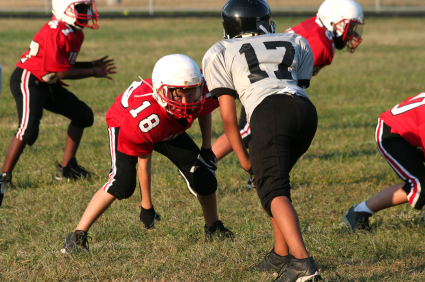
Concussion injuries and post-concussion syndrome have received a great deal of media attention recently. Worldwide, professional athletes from a variety of sports appear almost daily in newspapers, magazines and online in discussion about head injuries, return-to-play and long-term health issues.
Head injuries are not limited to professional sports but are inherent to all sport activities. In every community, there are hundreds of young athletes who participate in the same sports and recreational activities as professional athletes. They, too, encounter the risk of injury on a regular basis. Overall, hockey and rugby have the highest incidence of concussion.
- headache
- memory loss
- vomiting
- nausea
- dizziness
- blurred vision
- reduced energy
- ringing in the ears