
Archive
Don’t “Fall Back” Into Bad Habits This Winter
Leave a Comment
It’s the weekend we all dread! Daylight Savings Time ends Sunday morning at 2 a.m. ET.
As we fall back an hour and approach the winter solstice, with shorter days and colder temperatures, it’s tempting to stay indoors and do things that bring us comfort, like read books and watch movies. Unfortunately, these activities often leave us sedentary.
The importance of staying active
When we are not as active as we are in the summer, it affects the balance of chemicals produced in the body that impacts how we feel pain and pleasure: our endorphins.
Endorphins are produced by the body to respond to things like stress, fear, or discomfort. They interact with the parts of your brain responsible for your emotional responses and sensitivity to pain. Endorphins are responsible for your feelings of pleasure and are involved in your built-in reward system linked to eating, drinking, sexual activity, and maternal behaviour.
Fortunately, there are a few things you can do to help boost the level of endorphins in your body. One of those things is exercise.
Exercise encourages the body to produce more endorphins.
For example, sometimes runners experience a “runner’s high” level of vitality after a workout. The same experience can be had for anyone after an extended period of physical exercise. There are other benefits to working your body physically: exercise can give you more energy throughout the day, allowing you to sleep better at night and feel more relaxed. It also helps the brain repair and recover, reduces inflammation in the body, and helps you feel calm and have an overall sense of well-being.
The good news is that you can replicate these positive sensations by taking steps to add a bit more exercise into your day. Any activity leaving you out of breath for bouts of 10 minutes or more throughout the week can help you fend off the winter blues.

Other ways to boost endorphins
It’s not just exercise that helps your body boost endorphins: regular meditation, yoga, and tai chi help to decrease stress hormones and increase endorphins. Not only that, simple pleasures such as love, laughter, sunshine, and chocolate all increase endorphins as well.
Take care of yourself during the cold-weather months.
There are lots of ways to make the short winter days a little brighter. The wellness team at Pickering Village Chiropractic and Massage encourages you to make your physical and mental health a priority.
We provide our patients with more than just chiropractic and massage therapy services, but also the know-how to build better personal wellness habits so you can be at your best for work or play, every day.
To book an appointment or learn more about the chiropractic and therapeutic massage therapy services available at our clinic, call 905-427-3202.
With content from the Canadian Chiropractic Association.
Five Ways to Avoid a Backache the Next Time You Rake
Leave a Comment
As you head out to rake your leaves this month, chances are the last thing you’ll be thinking about is your posture.
It’s hard to believe, but an hour or so spent tidying your lawn can have long-term consequences if your body isn’t accustomed to the activity.
Ajax Chiropractors Dr. John Noble and Dr. Mark Fera and the massage therapists at Pickering Village Chiropractic and Massage have helped numerous patients overcome injuries, many of which have occurred while working around the home.
“Although raking may seem like an easy task, it’s actually an intensely physical activity,” says Dr. Noble. “To avoid injury, it’s important to make sure you’re performing this task correctly.”
Follow these tips and avoid a backache next time you rake.
Pick the right tool for the job
Is your rake the correct length for your height? Ideally, your rake should be about chin high. If it is too tall or too short, this could lead to improper reaching or bending and potential injury.
Get your body moving before the raking begins
Before you grab the rake, spend five to 10 minutes doing a variety of whole-body stretches. These can include a basic hamstring stretch, shoulder, wrist, and side stretches. For a full list of stretches, click here. Do each of the exercises five times, holding each for 15 seconds. Be sure not to bounce, jerk or strain. It should be a gentle stretch, not a pain.
Ensure proper raking posture
Once you’ve warmed up, keep your back straight while raking and avoid repetitive motions by switching arms and pulling in different directions. This allows you to work out different parts of your body equally.
Remember to bend at the knees when lifting
Whether you’re moving a planter across the deck or lifting a bag of leaves, remember to bend at your knees, not at your waist, and keep your feet shoulder-width apart. As you’re lifting, tighten your abs, straighten your knees and keep your back straight. For turning, you should avoid twisting at the waist by moving your feet instead.
Take frequent breaks
Every 20 minutes or so, pause for a few minutes to catch your breath and stay hydrated. Check your posture and perform a few stretches to ensure that you are maintaining flexibility throughout raking.
Follow these tips to rake safely and effectively. However, if an injury does occur, give our clinic a call at 905-427-3202 and book a consultation with our chiropractic or massage therapy team.
Suffering from Lower Back Pain? Give Yoga a Try!
Leave a Comment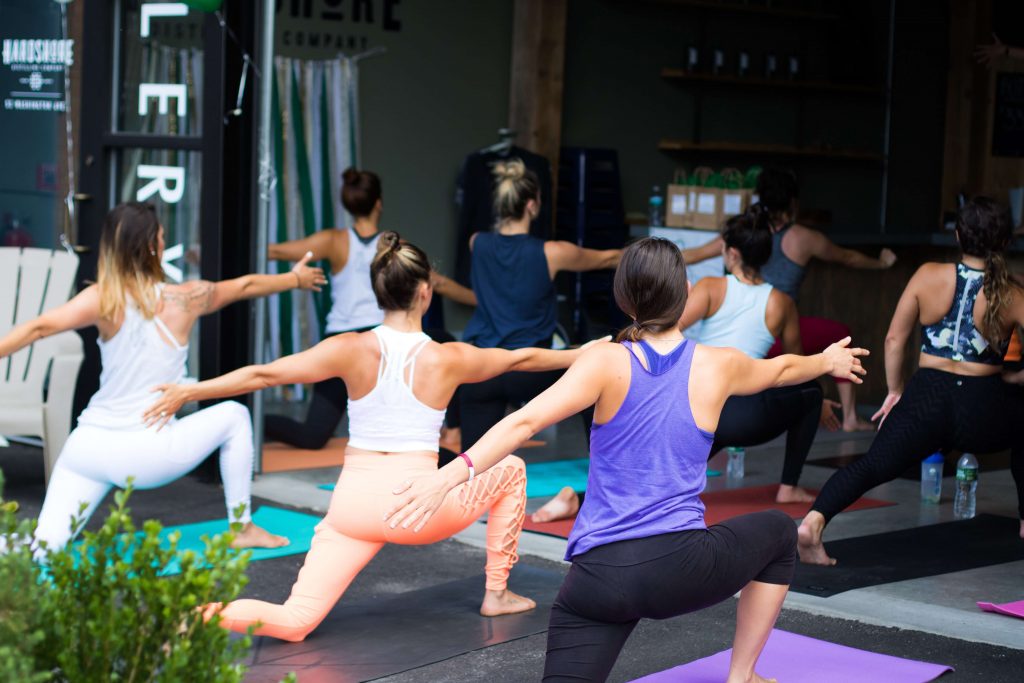
If you suffer from lower back pain, the relief you’ve been looking for may be a little farther than the medicine cabinet but as close as your local community centre or yoga studio.
With so many of us spending an increasing amount of time hunched over a computer keyboard, it’s not surprising that our back often suffers. While it may be difficult to fight the urge to reach for a quick-fix in the form of pain-numbing pills, medication only offers short-term relief without solving the problem.
Aside from headaches, low back pain is one of the most common complaints of Canadians today. In addition to stress-related causes, this pain may also be due to overuse or injuries such as those occurring after rigorous physical activity, or a mild-to-serious car accident.
Together with chiropractic, yoga offers another way to prevent low back pain by strengthening your core muscles.
Yoga consists of an extensive set of exercises (or poses) designed to promote muscle strength, flexibility and proper breathing. It has been studied as a treatment for lower back pain; carpal tunnel syndrome; osteoarthritis of the hands; depression; asthma; hypertension; and many more conditions.
There are various poses which can help relieve low back pain, and even just a few minutes of yoga on a regular basis can reduce pain and strengthen your core abdominal muscles.
As well as strengthening core muscles, yoga is also helpful if there are psychological factors involved in your back pain. The act of doing these poses promotes relaxation and calmness, which relieves the mental stress and anxiety that might have eventually lead to more back pain.
In addition to the mind-body connection, yoga also focuses on the spine.
In accordance with Dr. Noble and Dr. Fera’s chiropractic principles, many of the body’s aches and pains can be attributed to the misalignment of vertebrae. Yoga is a proven natural way to decrease your back pain, strengthen your core, and improve your overall sense of well-being. Doing yoga properly and having regular chiropractic care ensures a reduction of pain and treatment.
Yoga can be an effective and gentle tool to help manage your low back pain. Its many benefits include relief from pain, stress and anxiety – it’s also fun and challenging!
Yoga can help you reduce muscle tension, increase flexibility and strength while improving your balance. Warm up before trying yoga, as you want to help your back pain, not make it worse.
Here is a list of yoga poses that are great for beginners and can be done at home! Always listen to your body and do not continue a pose if it is painful. If you’re unsure if yoga is right for you or feel pain once you try it, talk to your chiropractor.
Downward Dog strengthens the shoulders, core, back and legs while promoting back flexibility.
Warrior Pose helps separate hip and leg movement from pelvic and low back mobility.
Cobra Pose helps strengthen your shoulders and back while promoting flexibility in the upper back.
Pyramid Pose strengthens your legs and spine and teaches body awareness on how to hinge and move from the hip joint.
——————————————————————————————————————————————————-
The wellness team at Pickering Village Chiropractic & Massage encourages you to improve your overall health by making exercise a part of your daily routine. If you want to learn more about managing your health with exercise, contact our clinic today at 905-427-3202.
With content from the Ontario Chiropractic Association and the Canadian Chiropractic Guideline Initiative.
Share the Benefits of Chiropractic Care with Your Family and Friends
Leave a Comment
If you’re a patient at our clinic, you know what’s involved in chiropractic treatment and have experienced the benefits.
Dr. John Noble and Dr. Mark Fera invite your loved ones, family and friends to experience the benefits, as well, with a complete chiropractic consultation and examination at our expense (a $150 value) during our annual Patient Appreciation Week. This year, Patient Appreciation Week takes place between October 12th through 16th, 2021.
If your friends and family are suffering from neck, shoulder or back pain, fear of the unknown may be keeping them from enjoying the benefits of chiropractic care. Besides letting them know the impact chiropractic care has had on your life, they may also need answers to the questions below.
What is chiropractic care?
Chiropractic care is a profession concerned with the diagnosis, treatment and prevention of mechanical disorders of the musculoskeletal system, and the effects of these disorders on the function of the nervous system and general health. Chiropractic care’s emphasis is on manual treatments, which include spinal adjustments and other joint and soft-tissue manipulation.
Chiropractors are spine, muscle and nervous system experts. They are specifically trained to diagnose the underlying cause and recommend treatment options to relieve pain, restore mobility and prevent reoccurrence without surgery or pharmaceuticals.
What are the benefits?
Your musculoskeletal system supports your weight, provides physical stability, enables you to move your body, and protects your vital organs.
Benefits of chiropractic care include:
- Improved movement in your neck, shoulders, back and torso
- Better posture
- Relief from headaches, neck and back pain
- Prevention of work-related muscle and joint injuries
- Enhanced athletic performance
- Improved flexibility
- Relief of pregnancy-related backache
- Correction of gait and foot problems
What can I expect from my chiropractic treatment?
Chiropractic treatments normally consist of manual therapy, including joint manipulation, mobilizations and soft tissue therapy.
- A manipulation (commonly known as an adjustment) is a quick, small thrust to the spine or other parts of the body intended to provide immediate pain relief and mobility.
- Mobilizations are slower, more passive movements or stretches that help relieve stiff joints.
- Soft tissue therapy refers to a variety of different techniques focused on alleviating discomfort without causing movement.
In addition to manual therapies, Ajax chiropractors Dr. John Noble and Dr. Mark Fera are trained to recommend a course of action that includes exercise, ultrasound or laser treatments, rehabilitation, nutritional counselling and injury prevention strategies.
Whether you are suffering from a specific injury to your muscles, tendons, ligaments and nerves, or you have a chronic condition such as spinal stenosis, osteoarthritis or inflammatory arthritis, Dr. Fera and Dr. Noble can help relieve pain and restore function in the following areas of the body:
- Head and neck
- Shoulders
- Mid-back
- Low back and pelvis
- Elbows, wrists and hands
- Hips, knees, ankles and feet
Are chiropractic treatments safe?
It is important to keep in mind that there is a difference between something being unsafe and having potential reactions. Any therapeutic treatment from medication to manual therapy comes with potential risk.
For example, there is a concept in the pharmaceutical industry known as a risk-benefit analysis which is used to assess how much benefit a medication has compared to the potential risk. The riskier the medication, the less likely it will become mainstream. Spinal manipulations should be recommended for patients when a similar risk-benefit assessment has been conducted. This assessment on the safety of chiropractic treatments is performed via the patient intake form and physical examination.
We have reserved a limited number of appointments during Patient Appreciation Week: October 12th – 16th.
Take the Pain Out of Your Daily Routine
Leave a Comment
Whether you’re a student, work in an office or run your own business from home, your daily routine can be a pain … literally. And often, it’s not the big tasks that take the biggest toll on our bodies.
We live in a world where we’re constantly in a hurry, juggling multiple tasks and carrying our belongings with us everywhere. And, believe it or not, this can have serious consequences on your back health.
In fact, back pain sends more patients to doctors than any condition other than the common cold.
Here are some common activities that negatively impact Canadian’s back health:
Back Pain and Commuting
Just like sitting at your desk, hunching over your steering wheel can cause your muscles to tighten, curving your back. Over time this can result in long-term lower back problems. This is important for the 15.4 million Canadians who commute to keep in mind.
The solution
- Sit at a 90-degree angle and don’t fully extend your legs.
- Move your seat up to allow yourself to sit up straight.
- Adjust your lumbar to fit your back, and if it’s not enough support, try rolling up a towel to help decrease stress on your lower back.
Back Pain in Your Work life
Did you know sitting puts 40 percent more pressure on your spine than standing? It’s important to remember your posture especially when you’ve had a long day at your desk.
The solution
- Practice ‘active sitting’ with your feet flat on the floor in front of you with your back straight, your shoulders squared and chin parallel with the floor.
- Ensure your workspace is set up to enable frequent breaks from sitting, like getting up to go to the printer and taking phone calls while standing.
Read some of our posts on how stretching can help alleviate the pain from improper desk posture.
Back Pain from Carrying Your Belongings
When you’re carrying a heavy purse or laptop bag, your shoulders become out of line. This can cause your muscles to ache and throw your spine out of line.
The solution
- Reduce the number of items you carry with you.
- Consider using a backpack to help distribute the weight of your load evenly across your body. This will help avoid the stress of isolated muscles overcompensating for unevenly distributed weight.
Read some of our posts on choosing the right backpack and lifting your luggage correctly.
Back Pain from Improper Lifting
Strained your back while lifting heavy boxes? You’re not alone. Lifting heavy items improperly can put undue pressure on your spine and even cause spinal disc injury.
The solution
Picture yourself doing the lift before engaging to ensure you’re keeping the object in front of you, your back is straight and you’re lifting with your knees/hips rather than your back.
Related: Five Things Your Chiropractor Wishes You’d Stop Doing
How can chiropractic and massage therapy help with your back pain?
Chiropractic treatment relieves back pain using effective clinical tools like manipulation, mobilization, soft tissue therapy, exercise, patient education and rehabilitation.
Extensively trained in spinal manipulative therapy (SMT), chiropractors are proficient in providing specialized care which has been proven effective in reducing pain, improving function, and decreasing the chances of low back pain becoming a chronic condition.
Ajax chiropractors Dr. John Noble and Dr. Mark Fera can provide education on your spine and posture and create a personalized treatment plan for your low back pain designed to ease pain and lower your risk of recurrence.
Therapeutic massage therapy is also available at our clinic by Ajax massage therapists Rolf Castanheiro and Jessica Raedisch.
Call 905-427-3202 to learn more and book an appointment.
With files from the Ontario Chiropractic Association.
Don’t Miss Patient Appreciation Week: October 12th – 16th, 2021
Leave a Comment
Even though September is just getting underway, Pickering Village Chiropractic & Massage is planning for October and our annual Patient Appreciation Week. Dr. John Noble and Dr. Mark Fera invite your loved ones, family and friends to experience a complete chiropractic consultation and examination at our expense (a $150 value).
If you’re a patient at our clinic, you know what’s involved in chiropractic treatment and have experienced the benefits.
If your friends and family are suffering from neck, shoulder or back pain, fear of the unknown may be keeping them from enjoying the benefits of chiropractic care. Besides letting them know the impact chiropractic care has had on your life, they may also need answers to the questions below.
What is chiropractic care?
Chiropractic care is a profession concerned with the diagnosis, treatment and prevention of mechanical disorders of the musculoskeletal system, and the effects of these disorders on the function of the nervous system and general health. Chiropractic care’s emphasis is on manual treatments, which include spinal adjustments and other joint and soft-tissue manipulation.
Chiropractors are spine, muscle and nervous system experts. They are specifically trained to diagnose the underlying cause and recommend treatment options to relieve pain, restore mobility and prevent reoccurrence without surgery or pharmaceuticals.
What are the benefits?
Your musculoskeletal system supports your weight, provides physical stability, enables you to move your body, and protects your vital organs.
Benefits of chiropractic care include:
- Improved movement in your neck, shoulders, back and torso
- Better posture
- Relief from headaches, neck and back pain
- Prevention of work-related muscle and joint injuries
- Enhanced athletic performance
- Improved flexibility
- Relief of pregnancy-related backache
- Correction of gait and foot problems
What can I expect from my chiropractic treatment?
Chiropractic treatments normally consist of manual therapy, including joint manipulation, mobilizations and soft tissue therapy.
- A manipulation (commonly known as an adjustment) is a quick, small thrust to the spine or other parts of the body intended to provide immediate pain relief and mobility.
- Mobilizations are slower, more passive movements or stretches that help relieve stiff joints.
- Soft tissue therapy refers to a variety of different techniques focused on alleviating discomfort without causing movement.
In addition to manual therapies, Ajax chiropractors Dr. John Noble and Dr. Mark Fera are trained to recommend a course of action that includes exercise, ultrasound or laser treatments, rehabilitation, nutritional counselling and injury prevention strategies.
Whether you are suffering from a specific injury to your muscles, tendons, ligaments and nerves, or you have a chronic condition such as spinal stenosis, osteoarthritis or inflammatory arthritis, Dr. Fera and Dr. Noble can help relieve pain and restore function in the following areas of the body:
- Head and neck
- Shoulders
- Mid-back
- Low back and pelvis
- Elbows, wrists and hands
- Hips, knees, ankles and feet
Are chiropractic treatments safe?
It is important to keep in mind that there is a difference between something being unsafe and having potential reactions. Any therapeutic treatment from medication to manual therapy comes with potential risk.
For example, there is a concept in the pharmaceutical industry known as a risk-benefit analysis which is used to assess how much benefit a medication has compared to the potential risk. The riskier the medication, the less likely it will become mainstream. Spinal manipulations should be recommended for patients when a similar risk-benefit assessment has been conducted. This assessment on the safety of chiropractic treatments is performed via the patient intake form and physical examination.
We have reserved a limited number of appointments during Patient Appreciation Week: October 12th – 16th.
Six Million Canadians are Impacted by Arthritis: It’s Not Just a Disease of the Elderly
Leave a Comment
September is Arthritis Awareness in Canada.
With over 100 different forms of the disease, arthritis impacts six million Canadians of all ages, including children.
Arthritis care costs the Canadian economy an estimated $33 billion per year and leads to more deaths than HIV/Aids, melanoma and asthma.
Arthritis is often invisible to those who don’t have it and is much more serious than most think. Unfortunately, it is also plagued by misconceptions – like the belief that arthritis only involves minor aches and pains and only impacts older people.
Worldwide, arthritis is one of the most common conditions affecting the joints. Not just a disease of the elderly, arthritis can strike anyone at any time, regardless of age, health, and ethnic background.
Arthritis is a disease that swells, stiffens, and can damage irreversibly the moveable joints in the body. The inflammation it causes can affect internal organs and eyesight and can contribute to pre-mature death — there is no cure.
People with arthritis live in pain, often severe, and are limited in their ability to go about day-to-day living. They have a higher than average battle with fatigue, poor mental health and an inability to stay employed due to the symptoms they experience.
The Facts about Arthritis
- Arthritis is a category of disease that includes more than 100 types, such as osteoarthritis, rheumatoid, lupus, fibromyalgia, gout and scleroderma.
- In 2000, three of every five people with arthritis were younger than 65.
- Arthritis is the leading cause of disability in Canada.
- Each year, approx 100,000 Canadians are diagnosed with arthritis. The average age of onset is between 41 and 50. About one in six Canadians aged 15 and older has some form of the disease and two-thirds of those affected are women.
- The most common type of arthritis in Canada is osteoarthritis, affecting 1 in 10 Canadians.
- Rheumatoid arthritis is the second most common type of arthritis, affecting 1 in 100 Canadians. You can get rheumatoid arthritis at any age, but it most often appears between the ages of 25 and 50.
- Arthritis affects nearly twice as many Canadian women as men.
- Arthritis costs Canadians more than $4 billion each year in health-care expenses and lost productivity.
Two of the most common types of arthritis are osteoarthritis and rheumatoid arthritis. While they might sound similar, they have very different causes and symptoms.
 What is Osteoarthritis?
Osteoarthritis is the most common kind of arthritis. It is characterized by “wear and tear” of the cartilage on either end of the bone.
With time, the cartilage may break down causing the two ends of the joints to rub against each other. It occurs when cartilage (the tough elastic material that covers and protects the ends of the bones) begins to wear away. Cartilage is an essential part of the joint; not only does it act as a shock absorber; it also enables the joint to move smoothly.
How Osteoarthritis Affects Your Body
With osteoarthritis, the cartilage erodes, eventually resulting in pain, stiffness, swelling, and bone-on-bone movement in the affected joint. In the spine, osteoarthritis can cause stiffness in the neck and lower back. Cervical arthritis affects the upper spine and neck. Lumbar or lumbosacral arthritis affects the lower back and pelvic area.
What is Rheumatoid Arthritis?
Rheumatoid arthritis is an autoimmune disorder that can affect the entire body. The body’s own immune system mistakenly identifies normal joints as “abnormal,” resulting in an inflammation that can be extensive and painful. If the inflammation is not controlled, damage to the surrounding cartilage and bone within the joint can occur.
How Rheumatoid Arthritis Affects Your Body
With rheumatoid arthritis, the target of the immune attack is tissue in the lining of the healthy joints, resulting in damage to cartilage, bone, tendons and ligaments; sometimes, in other internal destruction. Rheumatoid arthritis usually begins slowly, starting in a few joints and then spreading to other joints over a few weeks to a few months. As time goes on, rheumatoid arthritis involves more and more joints on both sides of the body often in a “symmetrical” pattern.
Worried about how arthritis will affect you or someone you love over the coming months? Read more about how to flourish while at work or school this fall.
Chiropractic for Arthritis
Chiropractic care has been proven effective in treating arthritis and its symptoms. At Pickering Village Chiropractic and Massage, chiropractors Dr. John Noble and Dr. Mark Fera treat patients who live with both genetic and non-genetic related forms of arthritis.
How Does Chiropractic Help Arthritis?
Chiropractic for arthritis addresses the practical issue of getting the body to move more freely. Once the body is aligned to move with fewer restrictions, the need for pain medication lessons, or disappears altogether.
Chiropractic as a regular treatment will also help prevent arthritis, or at least its damaging effects. Dr. Noble and Dr. Fera believe this form of prevention is probably the most crucial benefit in treating the disease.
The lifestyle changes and therapies associated with chiropractic influence diet, exercise and maintaining the body’s alignment will offset health problems that might accompany arthritis. Proper weight and a healthy immune system are both important facts in limiting the devastating effects of all forms of arthritis, especially osteoarthritis and rheumatoid arthritis.
To learn more about how regular chiropractic and massage therapy treatments can help alleviate the symptoms of arthritis, contact Pickering Village Chiropractic and Massage to book a consultation.
Discover the Benefits of Getting Your Exercise in the Water
Leave a Comment
The heat is on across Southern Ontario. Whether you’re staying cool in a nearby lake, beach, or swimming pool, let’s talk about water exercises and why they’re good for your body.
Here are nine benefits of exercising — particularly swimming — in water:
- There’s low impact on your joints: Water gives you buoyancy—i.e., you float! This decreases the impact on your joints, so when you swim or exercise in the water, you have a lower risk of injury.
- It does a better job at keeping you cool: Working out can cause you to overheat, especially in the summer. Exercising in the water helps the body cool off faster and reduces the risk of overheating. If the water is warm, it may not help keep you cool, but it does help increase blood circulation, which is a plus when exercising.
- Water has built-in resistance: Because you’re moving your body through water instead of through air, you’re working harder. This resistance is great for building all-around strength and endurance.
- You can adjust the resistance: Depending on your speed, position, or form in the water, the resistance you face is dynamic. For example, the more streamlined your swim stroke, the faster you’ll travel with less resistance. If you’re jogging or running in water, particularly if it goes higher than your waist, you’re getting much more resistance (this is often done if you’re training to improve your running speed, strength, and endurance when you’re on land).
- It gets easier over time: The more knowledge and skill you have with respect to swimming, the more efficient your body becomes when moving through the water. This translates to less energy and effort exerted, and greater speed. The good news is that the more you learn, practice, and condition your body, the easier swimming will be.

- You can incorporate rest: You don’t have to stop exercising in the water to give your body a rest during a workout. If you’re swimming, you can add resting strokes like sidestroke or elementary backstroke for a minute or two (or a lap or two in the pool) until you recover.
- You can increase intensity slowly: The benefit of swimming is that you can make gradual changes to your routine without much effort. Simply increase the time spent swimming continuously and take shorter rest breaks—or replace your breaks with rest strokes (see tip #6) as you build up your swimming regime.
- It’s great for keeping joints limber and toning muscles: Since exercising in the water is so low impact, your joints stay nimble. With the built-in resistance of the water, swimming is great for keeping your muscles toned.
- It offers support for the whole body: Not only is exercising in the water low-impact, it’s also excellent for support. Bonus: it supports your back! You don’t have to worry about the weight of your body on your spine or your posture when you move your body through water. If you’re not a swimmer, you can still use the water for gentle exercise: do some walking workouts waist-deep in a swimming pool to take the pressure off your joints and back while still getting movement.
So, take the pressure off, hit up your local beach or pool, and go for a swim!
Remember to stay hydrated when you exercise. If you’re swimming outdoors this summer, be sure to remember to be safe in the sun and heat.
Are you suffering from neck, shoulder or low back pain?
At Pickering Village Chiropractic and Massage, we use chiropractic treatment to relieve neck, shoulder and low back pain using effective clinical tools like manipulation, mobilization, soft tissue therapy, exercise, patient education and rehabilitation.
Extensively trained in spinal manipulative therapy (SMT), our chiropractors provide specialized care to reduce pain, improve function, and decrease the chances of neck, shoulder and low back pain becoming a chronic condition.
Looking for a chiropractor?
Ajax chiropractors Dr. John Noble and Dr. Mark Fera can provide education on your spine and posture and create a personalized treatment plan for your low back pain designed to ease pain and lower your risk of recurrence. Therapeutic massage therapy is also available at our clinic by massage therapists Rolf Castanheiro and Jessica Raedisch. Call 905-427-3202 to book an appointment.
Your Back-to-School Guide to Backpack Safety
Leave a Comment
If you’re preparing to send your children off to school next month, Ajax chiropractors Dr. John Noble and Dr. Mark Fera encourage you to use common sense when choosing their new backpack for the school year.
How your children carry their backpacks can affect their health.
Carrying a heavy load that is unevenly or improperly distributed can result in poor posture; and even distort the spinal column, throwing it out of alignment. This can cause muscle strain, headaches, back, neck and arm pain, and even nerve damage.
A heavy backpack carried on one shoulder, for example, forces the muscles and spine to compensate for the uneven weight. This places stress on the mid and lower back and may increase the likelihood of back problems later in life.
While we don’t often associate neck, shoulder and back pain with children and teens, we should. More than 50 per cent of young people experience at least one episode of low back pain by the time they reach their teenage years, with research indicating that the improper use of backpacks is one of the major causes.
If your child does complain of back pain, numbness or weakness in his or her arms and legs, it’s crucial that they get help to prevent future problems. Contact the Pickering Village Chiropractic and Massage Therapy clinic to learn more at 905-427-3202.
Does your child know the proper way to carry a backpack?
Prevention is key. Here are a few tips for helping your school-age children carry their backpack comfortably and safely.
Choose the right backpack
Leather may look great, but it’s far too heavy. Go for vinyl or canvas instead. Choose a backpack that has two wide, adjustable, padded shoulder straps, along with a hip or waist strap, padded back and plenty of pockets. Make sure the pack fits properly, is not too snug around the arms and under the armpits, and that its size is proportionate to the wearer’s body.
Pack light — they’re not moving out!
Make sure your child’s backpack contains only what is needed for that day, ensuring that the weight is distributed evenly. It’s a good idea to know roughly what each item weighs. The total weight of the filled pack should be no more than 10 to 15 per cent of the wearer’s own body weight. Pack heaviest objects close to the body, and place bumpy or odd-shaped ones on the outside, away from the back.
Teach your child the proper way to put on a backpack
It’s a good idea to help young children with this, at least the first few times. Put the backpack on a flat surface, at waist height. Slip on the pack, one shoulder at a time, then adjust the straps to fit comfortably. Remember when lifting a backpack, or anything, to lift using the arms and legs and to bend at the knees.
Wear it right — make the backpack do the work!
Both shoulder straps should be used, and adjusted so that the pack fits snugly to the body, without dangling to the side. Backpacks should never be worn over just one shoulder. You should be able to slide your hand between the backpack and your child’s back. The waist strap should also be worn for added stability.
To learn more, book a consultation with Ajax chiropractors Dr. John Noble or Dr. Mark Fera at Pickering Village Chiropractic & Massage. Call us today at 905-427-3202.
With content from the Ontario Chiropractic Association
Take Care While Camping This Summer
Leave a Comment
Have you been camping yet this summer? With so many beautiful campgrounds and provincial parks across Ontario, heading out into the great outdoors with your family or friends is a popular pastime.
The fresh air, a well-lit campfire, and a dip in the lake are difficult to resist. But preparing for camping is just as important as enjoying it.
Be ready for the unexpected!
Campgrounds and parks allow us to enjoy a large variety of recreational activities, which is what makes it a summer favorite. Preparing and organizing packing ahead of time can help you manage the unexpected and tackle challenges as they arise. To help out all our campers this summer, here are a few useful tips to follow before you load up the tent and strap your canoe on the roof of the car:
- Test your gear to ensure it works. Before packing materials in your vehicle, test your equipment to ensure it works. Do you have enough pegs for your tent? Does your air mattress inflate properly? Finding this out beforehand can save you a lot of frustration.
- Plan for activities. Plan your activities in advance to ensure that you have the right equipment and are physically ready for the challenge.
- Familiarize yourself with your upcoming campsite. Learning about the facility and what is available to you helps you prepare in advance for what to bring.
- Make a list and check it twice. Preparation is key! Make a list of the items that you may need, but consider what is truly essential. Packing extra weight can put a strain on your body, so be discerning and keep things light.
Like many other events in your life, camping can pose a number of risks to your musculoskeletal health.
Preparing for the challenges ahead can also help prevent potential injuries. If you plan on doing any activities during your camping trip such as hiking, biking, or running, it is a good idea to see your chiropractor in advance for tips and advice on how to physically prepare yourself when outdoors. Here are some tips to consider:
- Support your back. From packing to pitching the tent or while on a hike, keep neutral curves in your spine while keeping your core engaged and active. For exercises to improve your core, click here.
- Mind the lift. Remember to bend from the hips and knees while using your legs to lift. Keep a neutral spine and use your entire body to turn. Pivot from your feet to move your body.
- Pack light. Carry only what you need, and avoid excess. This can help prevent fatigue and strain from packing, hiking, or even canoeing. Being a minimalist can help prevent injuries. For tips on packing light, click here.
At Pickering Village Chiropractic and Massage, we provide our patients with more than just chiropractic and massage therapy services, but also the know-how to build better personal wellness habits so you can be at your best for work or play, every day.
To book an appointment or learn more about the chiropractic and therapeutic massage therapy services available at our clinic, call 905-427-3202.