
Archive
Introduce a Friend or Family Member to Chiropractic Care During Patient Appreciation Week: October 15-19th, 2019
Leave a Comment In celebration of Thanksgiving, Dr. John Noble and Dr. Mark Fera offer your loved ones, family and friends a complete chiropractic consultation and examination at our expense (a $150 value).
If you’re a patient at our clinic, you know what’s involved in chiropractic treatment and have experienced the benefits.
If your friends and family are suffering from neck, shoulder or back pain, fear of the unknown may be keeping them from enjoying the benefits of chiropractic care. Besides letting them know the impact chiropractic care has had on your life, they may also need answers to the questions below.
What is chiropractic care?
Chiropractic care is a profession concerned with the diagnosis, treatment and prevention of mechanical disorders of the musculoskeletal system, and the effects of these disorders on the function of the nervous system and general health. Chiropractic care’s emphasis is on manual treatments, which include spinal adjustments and other joint and soft-tissue manipulation.
Chiropractors are spine, muscle and nervous system experts. They are specifically trained to diagnose the underlying cause and recommend treatment options to relieve pain, restore mobility and prevent reoccurrence without surgery or pharmaceuticals.
What are the benefits?
Your musculoskeletal system supports your weight, provides physical stability, enables you to move your body, and protects your vital organs.
Benefits of chiropractic care include:
- Improved movement in your neck, shoulders, back and torso
- Better posture
- Relief from headaches, neck and back pain
- Prevention of work-related muscle and joint injuries
- Enhanced athletic performance
- Improved flexibility
- Relief of pregnancy-related backache
- Correction of gait and foot problems
What can I expect from my chiropractic treatment?
Chiropractic treatments normally consist of manual therapy, including joint manipulation, mobilizations and soft tissue therapy.
- A manipulation (commonly known as an adjustment) is a quick, small thrust to the spine or other parts of the body intended to provide immediate pain relief and mobility.
- Mobilizations are slower, more passive movements or stretches that help relieve stiff joints.
- Soft tissue therapy refers to a variety of different techniques focused on alleviating discomfort without causing movement.
In addition to manual therapies, Ajax chiropractors Dr. John Noble and Dr. Mark Fera are trained to recommend a course of action that includes exercise, ultrasound or laser treatments, rehabilitation, nutritional counselling and injury prevention strategies.
Whether you are suffering from a specific injury to your muscles, tendons, ligaments and nerves, or you have a chronic condition such as spinal stenosis, osteoarthritis or inflammatory arthritis, Dr. Fera and Dr. Noble can help relieve pain and restore function in the following areas of the body:
- Head and neck
- Shoulders
- Mid-back
- Low back and pelvis
- Elbows, wrists and hands
- Hips, knees, ankles and feet
Are chiropractic treatments safe?
It is important to keep in mind that there is a difference between something being unsafe and having potential reactions. Any therapeutic treatment from medication to manual therapy comes with potential risk.
For example, there is a concept in the pharmaceutical industry known as a risk-benefit analysis which is used to assess how much benefit a medication has compared to the potential risk. The riskier the medication, the less likely it will become mainstream. Spinal manipulations should be recommended for patients when a similar risk-benefit assessment has been conducted. This assessment on the safety of chiropractic treatments is performed via the patient intake form and physical examination.
We have reserved a limited number of appointments during Patient Appreciation Week: October 15th – 19th.
With content from the Canadian Chiropractic Association
How to Choose the Right Backpack for Your Child
Leave a Comment As you prepare to send your children off to school over the next few weeks, Ajax chiropractors Dr. John Noble and Dr. Mark Fera encourage you to use common sense when choosing your child’s new backpack for the school year.
Backpacks can affect your children’s health.
Carrying a heavy load that is unevenly or improperly distributed can result in poor posture; and even distort the spinal column, throwing it out of alignment. This can cause muscle strain, headaches, back, neck and arm pain, and even nerve damage.
A heavy backpack carried on one shoulder, for example, forces the muscles and spine to compensate for the uneven weight. This places stress on the mid and lower back and may increase the likelihood of back problems later in life.
While we don’t often associate neck, shoulder and back pain with children and teens, we should. More than 50 per cent of young people experience at least one episode of low back pain by the time they reach their teenage years, with research indicating that the improper use of backpacks is one of the major causes.
If your child does complain of back pain, numbness or weakness in his or her arms and legs, it’s crucial that they get help to prevent future problems. Contact the Pickering Village Chiropractic and Massage Therapy clinic to learn more at 905-427-3202.
Does your child know the proper way to carry a backpack?
Prevention is key. Here are a few tips for helping your school-age children carry their backpack comfortably and safely.
Choose the right backpack
Leather may look great, but it’s far too heavy. Go for vinyl or canvas instead. Choose a backpack that has two wide, adjustable, padded shoulder straps, along with a hip or waist strap, padded back and plenty of pockets. Make sure the pack fits properly, is not too snug around the arms and under the armpits, and that its size is proportionate to the wearer’s body.
Pack light — they’re not moving out!
Make sure your child’s backpack contains only what is needed for that day, ensuring that the weight is distributed evenly. It’s a good idea to know roughly what each item weighs. The total weight of the filled pack should be no more than 10 to 15 per cent of the wearer’s own body weight. Pack heaviest objects close to the body, and place bumpy or odd-shaped ones on the outside, away from the back.
Teach your child the proper way to put on a backpack
It’s a good idea to help young children with this, at least the first few times. Put the backpack on a flat surface, at waist height. Slip on the pack, one shoulder at a time, then adjust the straps to fit comfortably. Remember when lifting a backpack, or anything, to lift using the arms and legs and to bend at the knees.
Wear it right — make the backpack do the work!
Both shoulder straps should be used, and adjusted so that the pack fits snugly to the body, without dangling to the side. Backpacks should never be worn over just one shoulder. You should be able to slide your hand between the backpack and your child’s back. The waist strap should also be worn for added stability.
To learn more, book a consultation with Ajax chiropractors Dr. John Noble or Dr. Mark Fera at Pickering Village Chiropractic & Massage. Call us today at 905-427-3202.
With content from the Ontario Chiropractic Association
Too Much Time at Your Desk? Try This Stretch to Combat Neck and Shoulder Pain
Leave a CommentIf you’re stuck sitting at your desk for hours at a time this summer, you may find that the neck and shoulder pain you’re experiencing from your day job is affecting your extracurricular activities.
In our previous post, we discussed how poor desk posture often increases your risk of developing neck, shoulder and back pain. As crazy as it sounds, sitting for long periods of time, repetitive movements and awkward seating positions may lead to pain and discomfort long after you’ve left your desk
In the second video of our series addressing improper desk posture, registered massage therapists Jessica Raedisch and Rolf Castanheiro demonstrate the upper trapezius stretch.
Incorporate this stretch into your daily routine, and you may find that your neck and should pain slowly becomes a thing of the past.
Stay tuned in the coming weeks for stretches and techniques to help alleviate the pain caused by improper desk posture.
Remember, don’t be a slave to your desk! Get moving and enjoy doing the things you love. Your body will thank you for it!
To learn more about how regular chiropractic and massage therapy care can help you maintain better posture, contact the Pickering Village Chiropractic & Massage Therapy Clinic at 905-427-3202.
Are You Sitting Properly? How Your Daily Desk Posture Impacts Your Body
Leave a CommentA whopping 80% of the working population will experience some form of back pain at least once in their lifetime — 80%!
Many people sit all day at work, often with poor posture, and this can increase the risk of developing neck, shoulder and back pain.
Sitting down for long periods of time, repetitive movements and awkward seating positions may lead to pain and discomfort.
In this video, registered massage therapists Jessica Raedisch and Rolf Castanheiro address four of the most commonly seen problem areas for people who spend extended hours sitting at a desk.
.
Posture Problem 1: Forward head carriage while looking at the screen.
Posture Problem 2: Rounded shoulders as they reach out to the keyboard.
Posture Problem 3: Excessive sitting which leads to back pain, putting pressure on disks
Posture Problem 4: Crossing legs while sitting which strains the hip joints/
Stay tuned in the coming weeks for stretches and techniques to help alleviate the pain caused by improper desk posture.
Don’t be a slave to the office — get moving and enjoy doing the things you love.
To learn more about how regular chiropractic and massage therapy care can help you maintain better posture, contact the Pickering Village Chiropractic & Massage Therapy Clinic at 905-427-3202.
8 Simple Stretches to Keep You in the Game Without Pain
Leave a Comment
Don’t let your eagerness to get to the first tee keep you from warming up before each game. Forgetting to warm up can cause unnecessary injuries and more time spent in the clubhouse than on the course.
Take five minutes before you start to do these easy golf stretches so you can stay in the game all season long.
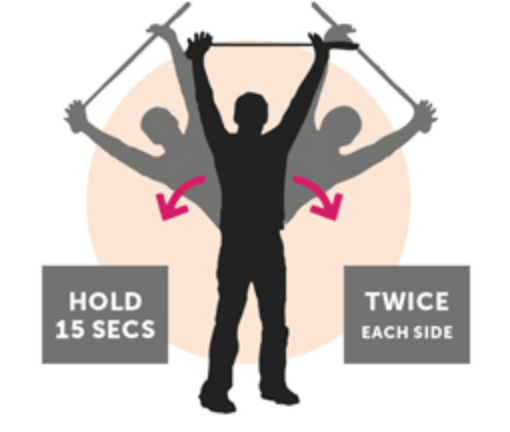
SIDE-BENDING STRETCH
• Stand with feet shoulder-width apart.
• Bend to one side without rotating until you feel a stretch in the side of your back.

QUADRICEPS STRETCH
• Keep your thighs together, and your knee pointing toward the ground.
• Pull your abdominal muscles in and maintain a straight back.
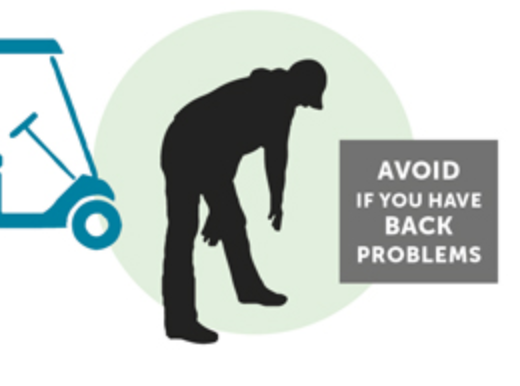
HAMSTRING STRETCH
• Stand with feet shoulder-width apart.
• Reach your hands towards the sky.
• Then, bending at the waist, reach toward your toes.
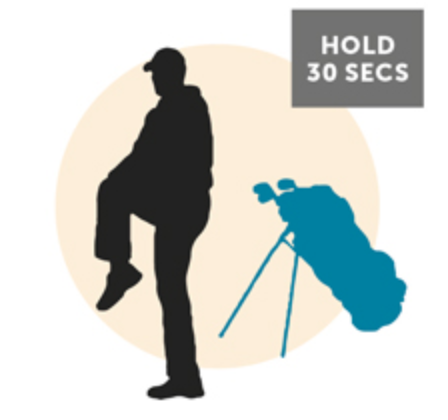
KNEE-TO-CHEST STRETCH
• Stand with feet shoulder-width apart.
• Using both hands, pull one knee into your chest.
• Repeat with the other knee.
 FOREARM STRETCH
• With your arm straight out in front of you and palm facing down, gently pull fingers back with other hand.
• Next, with your arm straight out in front of you and palm facing upwards, gently pull fingers back with other hand.
• Do not let shoulder rise up.
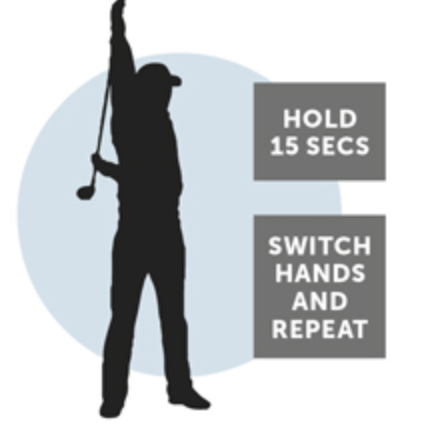 SHOULDER STRETCH
• Hold the shaft of a club behind your back.
• Gently pull the club up with your top hand until you feel a slight stretch in the shoulder of your lower arm.
• Next, gently pull the club down with your bottom hand until you feel a stretch in the top shoulder and arm.

SQUAT
• Start from standing position with feet shoulder-width apart.
• Squat down, trying to keep your heels flat on the ground.

BACK-OF-THE-SHOULDER STRETCH
• Place your left hand on your right shoulder.
• Gently pull your left elbow across your body toward your right shoulder.
To learn more about avoiding injuries while on the course, contact the wellness team at Pickering Village Chiropractic & Massage at 905-427-3202.
With content from the Ontario Chiropractic Association.
Why Choose Chiropractic Care?
Leave a Comment
Have you ever wondered what’s involved in a chiropractic treatment?
If your fear of the unknown has kept you from enjoying the benefits of chiropractic care, we hope this post provides you with a clearer understanding of the chiropractic profession, including what it is, how it works, what to expect after your appointment…and the first question on everyone’s list: is it safe?
What is chiropractic care?
Chiropractic care is a profession concerned with the diagnosis, treatment and prevention of mechanical disorders of the musculoskeletal system, and the effects of these disorders on the function of the nervous system and general health. Chiropractic care’s emphasis is on manual treatments, which include spinal adjustments and other joint and soft-tissue manipulation.
Chiropractors are spine, muscle and nervous system experts. They are specifically trained to diagnose the underlying cause and recommend treatment options to relieve pain, restore mobility and prevent reoccurrence without surgery or pharmaceuticals.
What are the benefits?
Your musculoskeletal system supports your weight, provides physical stability, enables you to move your body, and protects your vital organs.
Benefits of chiropractic care include:
- Improved movement in your neck, shoulders, back and torso
- Better posture
- Relief from headaches, neck and back pain
- Prevention of work-related muscle and joint injuries
- Enhanced athletic performance
- Improved flexibility
- Relief of pregnancy-related backache
- Correction of gait and foot problems
What can I expect from my chiropractic treatment?
Chiropractic treatments normally consist of manual therapy, including joint manipulation, mobilizations and soft tissue therapy.
- A manipulation (commonly known as an adjustment) is a quick, small thrust to the spine or other parts of the body intended to provide immediate pain relief and mobility.
- Mobilizations are slower, more passive movements or stretches that help relieve stiff joints.
- Soft tissue therapy refers to a variety of different techniques focused on alleviating discomfort without causing movement.
In addition to manual therapies, Ajax chiropractors Dr. John Noble and Dr. Mark Fera are trained to recommend a course of action that includes exercise, ultrasound or laser treatments, rehabilitation, nutritional counselling and injury prevention strategies.
Whether you are suffering from a specific injury to your muscles, tendons, ligaments and nerves, or you have a chronic condition such as spinal stenosis, osteoarthritis or inflammatory arthritis, a chiropractor can help relieve pain and restore function in the following areas of the body:
- Head and neck
- Shoulders
- Mid-back
- Low back and pelvis
- Elbows, wrists and hands
- Hips, knees, ankles and feet
Are chiropractic treatments safe?
It is important to keep in mind that there is a difference between something being unsafe and having potential reactions. Any therapeutic treatment from medication to manual therapy comes with potential risk.
For example, there is a concept in the pharmaceutical industry known as a risk-benefit analysis which is used to assess how much benefit a medication has compared to the potential risk. The riskier the medication, the less likely it will become mainstream.
Spinal manipulations should be recommended for patients when a similar risk-benefit assessment has been conducted. This assessment on the safety of chiropractic treatments is performed via the patient intake form and physical examination.
Adverse reactions to chiropractic treatments are temporary
Adverse reactions lasting less than 24 hours include headaches, stiffness, fatigue, local pain, prickling sensation, nausea, hot skin/flushing, and fainting. In up to 50% of patients, one or more of these have been reported over the span of a lifetime.
Contact Pickering Village Chiropractic & Massage today at 905-427-3202.
The wellness team at Pickering Village Chiropractic & Massage provides patients with more than just chiropractic and massage therapy services, but also the know-how to build better personal wellness habits so you can be at your best for work or play, every day.
To book an appointment or learn more about the chiropractic and therapeutic massage therapy services available at our clinic, call 905-427-3202.
With content from the Canadian Chiropractic Association
Spring Cleaning This Weekend? Follow These Tips to Avoid Injury
Leave a Comment
With the Easter long weekend behind us — and hopefully most of the rain — you may be ready to tackle your long list of household chores, some of which require a great deal of bending, reaching and twisting that may increase the risk of injuries. We’ve pulled together some tips to help you stay safe while checking off your to-do lists:
1. Warm up before you start to clean
As with any type of physical activity, it is very important to warm up the body before engaging in your spring-cleaning routine. You can prepare your body by walking around the house or doing some simple stretches to help prevent injury.
2. Break up heavy loads and make a few more trips
Think back to the last time you did groceries. Did you try to carry all the bags into the house at once, instead of taking multiple trips to the car? We know how tempting it is to make fewer trips, but you may be risking an injury. Take the extra few minutes and only carry a few bags at once. Don’t drive? Consider investing in a cart or buggy rather than carrying heavy bags.
3. Divide and conquer and get it done gradually
Do you save chores for your day off and ambitiously power through your list? You may find that dedicating 30 minutes every day to your household tasks can decrease your stress and risk of injury or fatigue.
Bonus: by getting a little bit done each day, you will have more time on the weekend for fun activities with family and friends.
4. Maintain proper posture while doing your chores
Vacuuming and mopping the floors often require excessive bending, reaching and twisting. Rather than stretching out your arms and bending at the waist to do the job, hold the vacuum or mop handle close to your body and walk back and forth with it. Avoid excessive twisting and keep a relaxed, neutral spine while doing these chores. Your back will thank you!
5. Switch it up and use your non-dominant hand
To prevent unwanted strain on your shoulders, neck, and back, use both sides of your body to do your spring cleaning. Every once in a while, consider cleaning the bathroom tiles or washing dishes with your non-dominant hand.
With these tips, you can feel confident in tackling your to-do list safely and effectively. However, if an injury does occur, give our clinic a call at 905-427-3202 and book a consultation with our chiropractic or massage therapy team.
With content from the Canadian Chiropractic Association
How to Avoid Injury While Working in the Garden
Leave a Comment
Before yesterday’s downpour, we had a fabulous day of sunshine and warmer weather in Southern Ontario. Did you spend Saturday cleaning up your yard? If so, did you think of stretching before you pulled on your gloves and got to work?
Many homeowners don’t, which is why, according to the Ontario Chiropractic Association, “gardening is the most common source of back and neck pain reported by patients in the warmer months.”
So remember, when the warmer returns, ease into your activities and follow these tips from the Ontario Chiropractic Association.
Here are some Tips for a Healthy Back in the Garden from the Ontario Chiropractic Association.
- Have the right tools for the task at hand.
- Ensure you drink plenty of fluids.
- Alternate between light and heavy jobs.
- Lift correctly.
- Take frequent breaks.
- Heavy loads should be shared.
- Your feed should be protected with thick-soled supportive shoes.
- Before you start, warm up your muscles.
- Avoid muscle strain, learn the right techniques.
- Change positions frequently.
- Kneel to plant and weed.
- Spinal check-ups can help keep your back healthy.

How Can Ajax Chiropractors and Ajax Massage Therapy Help with Your Low Back Pain?
Chiropractic treatment relieves low back pain using effective clinical tools like manipulation, mobilization, soft tissue therapy, exercise, patient education and rehabilitation.
Extensively trained in spinal manipulative therapy (SMT), chiropractors are proficient in providing specialized care which has been proven effective in reducing pain, improving function, and decreasing the chances of low back pain becoming a chronic condition.
Ajax chiropractors Dr. John Noble and Dr. Mark Fera can provide education on your spine and posture and create a personalized treatment plan for your low back pain designed to ease pain and lower your risk of recurrence.
Therapeutic massage therapy is also available at our clinic by Ajax massage therapists Rolf Castanheiro and Jessica Raedisch. Call 905-427-3202 to book an appointment.
With files from the Ontario Chiropractic Association.
Five Things to Remember When You’re Transitioning from the Treadmill to Running Outside
Leave a Comment
The increase of runners on the road — and sidewalks — is a sure sign spring has officially arrived!
If you’re one of the many people who has made the decision to take your cardio routine from the treadmill to the sidewalk – congratulations! You’re on your way to reaping some amazing benefits.
It’s only natural if you’re feeling a bit wary about transitioning your routine outdoors. But with a good pair of running shoes and some healthy preparation, we can help you get the most out of your outdoor run.
Please note: Running is a high-impact activity. If you’ve never run before, please consult a chiropractor/medical practitioner to ensure you won’t worsen any pre-existing conditions or cause injury to your joints.
Here are some tips to help get you started:
Warm up and cool down
Make sure you stretch before and after your run. Stretches are an essential part of your running routine to avoid injuries. Some important points to keep in mind:
- Never stretch a cold muscle
- Hold each stretch for a slow count of 30
- Repeat twice on each side
- Don’t overstretch—be comfortable
- Don’t bounce when stretching
Pick a road or trail you are familiar with
When starting out, the last thing you want to worry about is getting lost. Before you lace up your sneakers, do some research: ask friends where they like to run, use online running forums to find popular routes, and check to see if your park has designated trails. The more popular and visible the trail, the better.
Wear the appropriate footwear
Adapt your shoes to your environment. A regular running sneaker works for the flat, predictable surface of a treadmill. But once you are outdoors, make sure the sneaker’s tread can handle the gravel, dirt roads, and slick trails. Runners should get a sneaker that supports the feet while having the appropriate sole to help maneuver and provide support over uneven surfaces.
Begin slowly
Running outside is more taxing on your muscles, joints and bones, making you more prone to injuries like shin splints. Start off with shorter distances on flat roads or trails. As your endurance improves, gradually increase your mileage and hill work.
Maintain a constant pace
Don’t feel compelled to push yourself to run at the same pace that you would on a treadmill. Start with moderate and comfortable pace that allows you to run safely, and gradually increase your speed over several weeks as your body allows.
If you’ve been running on a treadmill for a while, transitioning to the outdoors may take time. The mechanics of running on a stationary treadmill are different than running outside on an uneven surface. When in doubt, you can always talk to a member of our wellness team about how to improve your form and prevent/manage injuries.
At Pickering Village Chiropractic and Massage, we provide our patients with more than just chiropractic and massage therapy services, but also the know-how to build better personal wellness habits so you can be at your best for work or play, every day.
To book an appointment or learn more about the chiropractic and therapeutic massage therapy services available at our clinic, call 905-427-3202.
With content from the Canadian Chiropractic Association.
Registered Massage Therapists Lobby to Play Key Role in Hospice, Home & Long-Term Care
Leave a Comment
Last November, the Registered Massage Therapists’ Association of Ontario (RMTAO) held its first-ever Queen’s Park Lobby Day.
This event provided an opportunity for registered massage therapists to meet with Members of Provincial Parliament (MPPs) from all political parties to discuss the benefits of massage therapy and the role that massage therapists can play in health care.
Robin Martin, a Parliamentary Assistant to the Minister of Health and Long-Term Care, discussed the role of massage therapy in the treatment of chronic pain and mental health associated with the provincial opioid crisis. France Gélinas, an NDP Health Critic and physiotherapist by training, also spoke about massage therapy in the treatment of low-back pain, hospice and home care, and addressing the opioid crisis. Ms. Gélinas expressed her appreciation for the benefits of massage therapy for musculoskeletal issues in all of these areas.

During meeting with MPPs from all parties, RMTAO representatives highlighted the benefits of massage therapy to treat:
- chronic pain
- address the physical symptoms of mental health issues
- and the role of massage therapy in hospice, home care, seniors’ care and long-term care.
MPPs were extremely enthusiastic and supportive and offered to:
- attend massage therapy events in their ridings,
- champion the inclusion of massage therapy in relevant government health initiatives,
- and act as a liaison between the RMTAO and key policymakers and researchers.

RMTAO representatives were excited to receive multiple requests for additional meetings with MPPs, Ministers and key committee members.
In particular, the Registered Massage Therapists’ Association of Ontario will be
- approaching new partnerships with seniors’ care policy groups,
- consulting with a member of the committee that will be examining the evolution of the Auto Insurance Benefit and the Statutory Accident Benefits Schedules (SABS),
- and connecting with the chair of the Premier’s Council on Improving Healthcare and Ending Hallway Medicine.
Ajax registered massage therapists Jessica Raedisch and Rolf Castanheiro would like to thank the volunteer RMTAO members who gave of their time and expertise to help the RMTAO build and maintain relationships with government representatives.