
Archive
Concussion: The Invisible Injury
Leave a Comment
A concussion is a traumatic brain injury that occurs when your brain is shaken inside your skull. All it takes is a hard tumble on the basketball court or a blow to your head, neck or body.
That’s right, you don’t necessarily have to hit your head. It can happen when your body jolts suddenly due to a hard tackle or a car accident; the resulting injury may be whiplash and a concussion.
This trauma can potentially damage the blood vessels in your brain or injure its tissue. To minimize the risk of long-term damage, it’s important to learn how to identify and manage a concussion.
The Invisible Injury
A concussion is often referred to as an ‘invisible injury’ because its symptoms aren’t always easy to recognize. Even MRI imaging isn’t perfect at identifying one. But when this kind of brain trauma happens, the effects are all too real.
Contrary to popular belief, concussions don’t only happen if you black out. In fact, nine times out of ten, concussions don’t make you lose consciousness and some only cause a brief interruption in mental alertness.
Athletes: Step back and manage a concussion
Studies have shown that most high school and college athletes don’t report concussions while playing football. They may not realize that a concussion can happen even if you don’t black out.
In the past, athletes in many sports returned to play too soon after a concussion, sometimes even on the same day. But thanks in part to Rowan’s Law, sports and health organizations are starting to take these injuries much more seriously. Trainers, health care professionals and athletes themselves are watching more closely for concussions. They are also taking a more conservative approach to rehabilitation and return to play. This is an important change for the health of athletes everywhere.
Here are some points to consider and steps you can take to reduce your risk of long-term effects:
How can I tell if I have a concussion?

Effective concussion management starts with recognizing the signs and symptoms, some of which may show up hours or days after your injury. It’s important for parents, coaches, trainers and athletes to recognize the warning signs and remove the athlete from play if any of them are present.
Check for warning signs of a concussion:
- Difficulty thinking clearly, concentrating or remembering new information
- Headache, blurry vision, queasiness or vomiting, dizziness, balance problems or sensitivity to noise or light
- Irritability, moodiness, sadness or nervousness
- Extreme sleepiness or difficulty falling asleep or remaining asleep
Concussion symptoms can vary widely from person to person. One person might suffer from pain, while another may have depression and trouble sleeping.
See a trusted, licensed health care professional as soon as possible.
Any athlete with potential concussion warning signs should see a medical doctor or nurse practitioner as quickly as possible for a diagnosis. Remember, there is no simple test for a concussion. You can miss a concussion if you rely only on a five-minute assessment done on the sidelines. (Note: If this incident did not occur during sport, another licensed health care professional, such as a chiropractor, is permitted to assess you and diagnose a concussion.)
Athletes, coaches, parents and health care professionals should stay up to date on concussion safety. If you are not comfortable dealing with a concussion yourself, have a plan in place so you know exactly who to ask for help to identify and manage a concussion if someone shows warning signs.
What should I do immediately afterwards to manage a concussion?
If you’ve had a concussion, the first 10 days are crucial. During this time, you’re at the greatest risk for another. Not only that, the risk of a second concussion rises every time you have one. If you can protect yourself in those first few days, you’ll have much better odds of a full recovery.
When can I return to play?
Most people recover from a concussion within a few days to three months. The Zurich Consensus statement on concussion recovery recommends the following five stages of rehabilitation:
- No activity: Focus on recovery. Rest your body and your mind.
- Light aerobic exercise: Get your heart rate up with light activities, such as walking, swimming and stationary cycling, but don’t go past 70 per cent of your maximum heart rate. Your goal is to increase your heart rate without risk of re-injury. Do not do any resistance training yet.
- Sport-specific exercise: Add movement by re-introducing sport-specific movement, like skating or running drills in soccer. Don’t do anything that might put your head at risk of being hit.
- Non-contact training drills: Add more complex training drills to improve your exercise, coordination and working memory (cognitive load). This can include passing drills in football or hockey. You may start resistance training again.
- Full-contact practice: Resume normal training once you attain ‘medical clearance’ to confirm it’s okay. This will build your confidence and skills before returning to play. A medical doctor or nurse practitioner can provide this medical clearance. A chiropractor can also co-manage return to play decisions and sports-specific guidelines.
If you experience recurring symptoms at any stage in your recovery, restart this process and remain inactive until the symptoms stop. Once you complete these five stages, you can return to play but only after a licensed health care professional, who is trained in evaluating and managing concussions, gives you medical clearance to do so.
What role does your health care team play?
A medical doctor or nurse practitioner can provide a thorough assessment, and concussion diagnosis and manage your condition. They can also evaluate ‘when’ you can safely return to play and provide medical clearance for you to do so.
The value of an interprofessional care team
In all cases though, it’s valuable to have a team, with various health care professionals, working together to help manage your concussion and get you back on the field safely, with an eye on your long-term health.
A chiropractor is often on the sidelines at sporting events, as a trainer or team chiropractor to prevent and address spine, muscle or joint injuries. Chiropractors in Canada are not currently permitted to diagnose a concussion that occurs during sport. However, they have the competencies, including neurological assessment skills, to assess and give you an informed referral to the appropriate health care professional for further evaluation/treatment. Your chiropractor will also work with your interprofessional care team to help manage your condition if needed.
Many athletes trust chiropractic care and its role in sports medicine, so they often consult their chiropractor when they first sustain an injury.
At Pickering Village Chiropractic & Massage, chiropractors Dr. John Noble and Dr. Mark Fera can diagnose neck, shoulder or back injuries that commonly occur with a concussion and offer appropriate treatment. They can also help you manage headaches, and back or muscle pain that results from a concussion.
While you’re resting and recovering, these injuries might resolve on their own. If not, they can help you recover and work with your care team to co-manage your return to play. As part of this process, they can evaluate your strength and physical function to help you know when your body is ready to get back in the game.
Some of the best-known strategies for managing a concussion include education, encouragement and a commitment to getting you back to your daily activities as soon as it is safe and appropriate. It takes a committed approach from the right health care team, along with your family and friends, to help you avoid or overcome many of a concussion’s negative results.
The chiropractic and massage therapy team at Pickering Village Chiropractic & Massage helps patients build better pathways to overall wellness, as well as relief from neck and back pain and muscle aches. Poor habits and injury can lead to pain that can restrict your ability to work or enjoy your leisure time.
We provide you with more than just chiropractic and massage services, but also the know-how to build better personal wellness habits so that you can be at your best for work or play, every day. Contact our clinic today at 905-427-3202.
With content from the Ontario Chiropractic Association
Why Your Muscles Feel Sore After a Workout
Leave a Comment
If getting in shape or intensifying your exercise routine was one of your goals since gyms reopened earlier this year, you’ve likely spent your fair share of time working out these past few months.
Have you ever wondered why your muscles feel so sore after a workout?
One reason may be delayed onset muscle soreness, otherwise known as DOMS.
Occurring anywhere between 24 to 48 hours after you try a new activity or exercise, or increase your workout intensity, DOMS can reduce your range of motion and muscle strength. This muscle soreness is a sign that your muscles are adapting to new loads.
The lactic acid myth
You may have heard that delayed onset muscle soreness is caused by a buildup of lactic acid. But lactic acid only lasts in your muscles one to two hours after a workout.
Resistance training causes micro-tears of muscle fibres, drawing increased blood flow and inflammation to the area, even leading to mild swelling, which stimulates the pain receptors in the muscle tissue and makes them more sensitive to movement.
The muscle damage is temporary. As muscle rebuilds itself, it gets stronger and can handle heavier loads.
How to reduce the discomfort of muscle soreness
Although DOMS is a natural process that indicates your body is getting stronger, there are ways you can reduce your level of discomfort.
- More exercise may be the best way to ease the soreness. Do a gentle workout such as light cardio, stretching or yoga a day or two after an intense workout. Pick up the intensity once the pain is gone.
- Introduce new exercises over a period of one to two weeks to give your body time to adapt.
- Try longer warmups before your resistance training.
- Take an Epsom salt bath. Epsom salts are made from magnesium, which helps relax muscles and improve circulation.
- Mix up your routine. If you do leg exercises one day, work your arms and core the next. This gives each muscle group time to recover.
- Stay hydrated and choose your foods wisely. Remember to drink plenty of water and replenish your electrolytes with a balanced diet full of fruits and vegetables. Leafy greens and bananas are two excellent options.
How to tell if it’s more serious
There are a few indicators that your pain can be something more serious than DOMS:
- The pain does not diminish after three days.
- The pain is so severe that you cannot carry on with daily tasks.
- The pain is so severe that your legs give out.
- You experience major swelling, redness, discolouration, or intense cramping.
- The pain is very sharp – this could suggest a sprain/strain.
If you are concerned about any of the above, your chiropractor can conduct a thorough assessment and offer non-pharmacological pain management strategies, stretches, or manual treatments. You will be referred to the appropriate medical professional if the cause of pain is out of the scope of chiropractic care.
The chiropractic and massage therapy team at Pickering Village Chiropractic & Massage helps patients build better pathways to overall wellness, as well as relief from back pain and muscle aches. Poor habits and injury can lead to pain that can restrict your ability to work or enjoy your leisure time.
We provide you with more than just chiropractic and massage services, but also the know-how to build better personal wellness habits so that you can be at your best for work or play, every day. Contact our clinic today at 905-427-3202.
With content from the Canadian Chiropractic Association
Are You Stretching Before You Hit the Course?
Leave a Comment
Don’t let your eagerness to get to the first tee keep you from warming up before each game. Forgetting to warm up can cause unnecessary injuries and more time spent in the clubhouse than on the course.
Take five minutes before you start to do these easy golf stretches so you can stay in the game all season long.
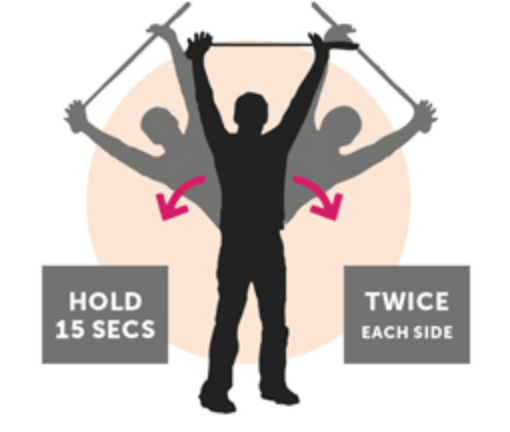
SIDE-BENDING STRETCH
• Stand with feet shoulder-width apart.
• Bend to one side without rotating until you feel a stretch in the side of your back.

QUADRICEPS STRETCH
• Keep your thighs together, and your knee pointing toward the ground.
• Pull your abdominal muscles in and maintain a straight back.
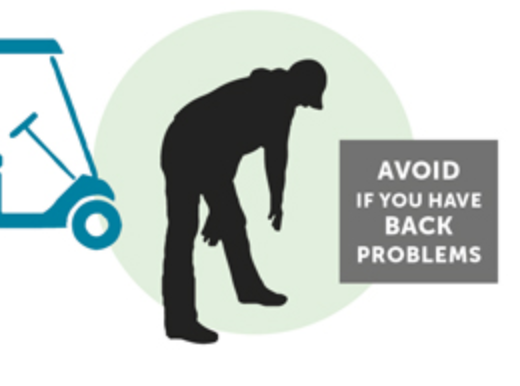
HAMSTRING STRETCH
• Stand with feet shoulder-width apart.
• Reach your hands towards the sky.
• Then, bending at the waist, reach toward your toes.
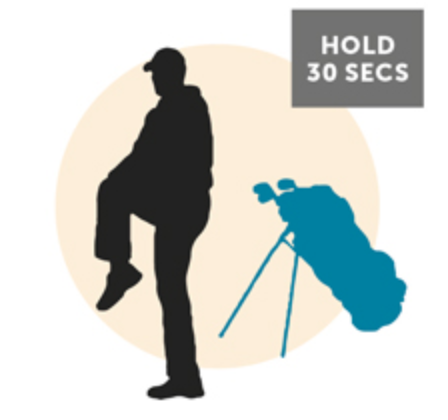
KNEE-TO-CHEST STRETCH
• Stand with feet shoulder-width apart.
• Using both hands, pull one knee into your chest.
• Repeat with the other knee.
 FOREARM STRETCH
• With your arm straight out in front of you and palm facing down, gently pull your fingers back with the other hand.
• Next, with your arm straight out in front of you and palm facing upwards, gently pull your fingers back with the other hand.
• Do not let shoulder rise up.
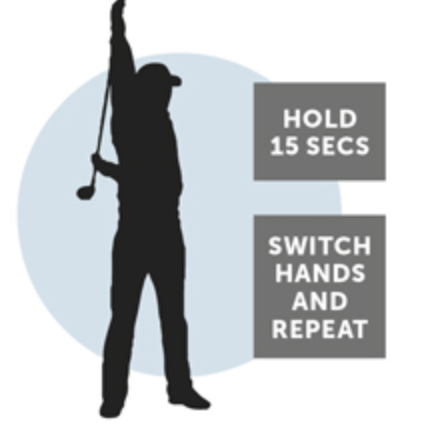 SHOULDER STRETCH
• Hold the shaft of a club behind your back.
• Gently pull the club up with your top hand until you feel a slight stretch in the shoulder of your lower arm.
• Next, gently pull the club down with your bottom hand until you feel a stretch in the top shoulder and arm.

SQUAT
• Start from a standing position with feet shoulder-width apart.
• Squat down, trying to keep your heels flat on the ground.

BACK-OF-THE-SHOULDER STRETCH
• Place your left hand on your right shoulder.
• Gently pull your left elbow across your body toward your right shoulder.
Have you been suffering from back or neck pain from all your time on the golf course? You’re not alone. At Pickering Village Chiropractic and Massage, we provide our patients with more than just chiropractic and massage therapy services. We also have the know-how to build better personal wellness habits so you can be at your best for work or play, every day.
To book an appointment or learn more about the chiropractic and therapeutic massage therapy services available at our clinic, call 905-427-3202.
How Massage Therapy and Chiropractic Care Help Treat Whiplash
Leave a Comment
Even with the high price of gas, summer road trips with your friends and family are likely high on your to-do list. After all, who doesn’t love to roll the windows down, crank up the music and enjoy the inviting summer breezes after a long winter spent indoors?
Unfortunately, more cars on the road mean more fender-benders and serious car accidents. For our chiropractic and massage therapy team, it means an influx of patients seeking care at our clinic for accident-related injuries.
Our Pickering chiropractic and massage therapy team has decades of experience helping patients move on from their injuries.
People injured in a motor vehicle accident sometimes experience a strain of their neck muscles and the surrounding soft tissue, commonly referred to as whiplash. Anyone who has had such an injury knows neck muscles can be very tender, and neck movement can be quite limited.
Whiplash is a neck injury due to forceful, rapid back-and-forth movement of the neck, like the cracking of a whip. Although whiplash most often occurs during a rear-end auto accident, the injury can also result from a sports accident, physical abuse or other trauma. Research shows that successful whiplash treatment requires patient cooperation and active efforts to resume daily activity.
Common signs and symptoms of whiplash usually — but not always — develop within 24 hours of the injury and may include:
- Neck pain and stiffness
- Worsening of pain with neck movement
- Loss of range of motion in the neck
- Headaches, most often starting at the base of the skull
- Tenderness or pain in the shoulder, upper back or arms
- Tingling or numbness in the arms
- Fatigue
- Dizziness
Most people with whiplash get better within a few weeks by following a treatment plan that includes pain medication and exercise. However, some experience chronic neck pain and other long-lasting complications.
Whiplash may be called a neck sprain or strain, but these terms also include other types of neck injuries.
Some people also suffer from:
- Blurred vision
- Ringing in the ears (tinnitus)
- Sleep disturbances
- Irritability
- Difficulty concentrating
- Memory problems
- Depression
Get Help for Your Whiplash Injury
Do not ignore whiplash-type injuries. If you experience any of the symptoms listed above, seek a medical examination. Health care professionals are alert for the signs of more serious neck trauma.
Good News
The good news is that most whiplash injuries are not serious and will heal fully. Many people experience little disruption in their activities and are able to get on with their daily lives.
Did You Know?
Whiplash can occur from many causes, not just car accidents. For example, it can happen from falling downstairs or having something fall on your head. It can also happen when tackled or bodychecked while taking part in contact sports.
Whiplash can also occur at a relatively low impact. For example, a hit in a car accident at less than 10km/hour can cause whiplash. Pain, stiffness and other symptoms of Grade 1 (tender muscles) or Grade 2 (limited neck movement) whiplash typically start within the first two days after an accident.
Avoid Whiplash in the Future: Adjust Your Car’s Headrest
Properly adjusting the height of your car headrest will help prevent whiplash injury in an accident. In an ideal adjustment, the top of your head should be in line with the top of the headrest and there should be no more than 2 to 5 cm between the back of your head and the headrest.
How Chiropractic Care and Massage Therapy Helps Treat Whiplash
Even if you seek chiropractic care complaining of neck pain following a trauma, your chiropractor will evaluate your entire spine because other regions of the spine may be affected (not just your neck). Your chiropractor will identify any areas of restricted joint motion, intervertebral disc injury, muscle spasm, and ligament injury and will also feel for tenderness, tightness, and how well your spinal joints move. In addition to performing a series of spinal adjustments to correct vertebral subluxations, your chiropractor may also prescribe therapeutic exercises to help restore normal motion in your spine and reduce whiplash symptoms.
Massage therapy helps rid the pain caused by whiplash and increases the amount of oxygen the body gives to the tissues, thus speeding up the recovery process. And by stimulating circulation and increasing the flow of oxygen, massage therapy may rid you of the headaches associated with whiplash.
Need help recovering from a whiplash injury? At Pickering Village Chiropractic & Massage, chiropractors Dr. John Noble and Dr. Mark Fera can evaluate and treat your injuries, and registered massage therapists Jessica Raedisch or Rolf Castanheiro will employ a variety of hands-on techniques to assess and treat the soft tissues and joints of the body. If you’re looking for chiropractic care and massage therapy in Ajax or Pickering, call our clinic at 905-427-3202 to make an appointment.
Why Headache Sufferers Turn to Chiropractic Care for Relief
Leave a Comment
Are you a headache sufferer? Do you find you get them regularly?
Headaches are very common among Canadians and can be very complex to diagnose. For some, they can seemingly strike at any time.
There are many types of headaches:
Tension Headaches
The most common type of headache, tension headaches are characterized as diffuse, dull, aching pain typically described as tightness around the head. Not surprisingly, the most common trigger for tension headaches is stress. Generally, this type of headache can be managed by decreasing your stress, applying a cold or hot pack and improving your posture. Conservative care, like chiropractic, can also help relieve symptoms and prevent a recurrence.
Migraine Headaches
Migraine headaches can present differently from person to person. Symptoms may include disturbed vision, nausea and vomiting, sensitivity to light, and are often accompanied by sensory warning symptoms (aura). Sufferers may need to lie down in a darkened room until the symptoms ease. The causes of migraine headaches are not yet known, but there are a number of triggers that are associated with migraines including stress, sleep deprivation, changes in the environment and certain foods. A migraine can last hours or even days.
Cervicogenic Headaches
A cervicogenic headache is classified as a secondary headache because the pain is referred from structures of the neck. Since the origin is usually related to the cervical spine, managing pain can include manual therapy and recommended at-home exercise to address postural issues and dysfunction.
What causes headaches?
The causes of migraines and other types of headaches are not entirely known. Commonly, joint dysfunction, muscle tightness and poor posture can lead to the development of pain and specifically headaches. The changing barometric pressure that accompanies an abrupt shift in the weather is also thought to trigger migraines.
Headache triggers to avoid, when possible:
- Stress
- Alcohol
- Skipping meals
- Dehydration
- Loud, sustained noise
- Sleep deprivation
Treatment for Headaches
Depending on the type of headache, your healthcare practitioner may recommend spinal manipulation, soft tissue therapy, home exercise, relaxation and/or nutritional counselling.
How do chiropractors help with headaches?
Chiropractors can assess, diagnose, and manage headaches. Current evidence suggests that chiropractic care, including manual therapy, can be effective in treating cervicogenic and tension headaches. Studies have also shown that chiropractic care can help decrease the intensity and frequency of migraines.
The treatment options may include:
- Manual therapy
- Soft tissue therapy
- Modalities including electrical stimulation, acupuncture, and ultrasound
- Rehabilitation
- Lifestyle changes and education
- Referral and co-management
It’s important to take headaches seriously. Consider consulting a chiropractor if you often have headaches, if you frequently take a pain reliever for your headaches, if your headache pattern changes, or if your headaches are getting worse.
Seek prompt attention if your headache is sudden and severe, follows a head injury, or is accompanied by fever, stiff neck, weakness, numbness, or difficulty speaking.
If headaches have become a regular part of your life, it may be time to seek help from a qualified healthcare professional, such as your chiropractor. Like other musculoskeletal conditions, headaches can be differentiated by a comprehensive examination and strategies to relieve the pain can be identified.
To learn more about how chiropractic care can help you manage your headaches, contact the Pickering Village Chiropractic & Massage Therapy Clinic at 905-427-3202 to book a consultation with a member of our wellness team.
Save Your Back This Summer with These 7 Camping Tips
Leave a Comment
The warm weather is here and that means more opportunities to go outdoors and have fun. One activity that many of us look forward to in the summer months is camping. The fresh air, a well-lit campfire and a dip in the lake are difficult to resist. But preparing for camping is just as important as enjoying it. Be ready for the unexpected.
Campgrounds and parks allow us to enjoy a large variety of recreational activities, which is what makes them a summer favourite. Preparing and organizing packing ahead of time can help you manage the unexpected and tackle challenges as they arise. We want to help out all our campers this summer with some useful tips to follow before you load up the tent and strap your canoe on the roof of the car:
- Test your gear to ensure it works. Before packing materials in your vehicle, test your equipment to ensure it works and do so safely.
- Plan for activities. Plan your activities in advance to ensure that you have the right equipment and are physically ready for the challenge.
- Familiarize yourself with your upcoming campsite. Learning about the facility and what is available to you helps you prepare in advance for what to bring.
- Make a list and check it twice. Preparation is key! Make a list of the items that you may need, but consider what is truly essential. Packing extra weight can put a strain on your body, so be discerning and keep things light.
Like many other events in your life, camping can pose a number of risks to your musculoskeletal health.
Preparing for the challenges ahead can also help prevent potential injuries. If you plan on doing any activities during your camping trip such as hiking, biking, or running, it is a good idea to see your chiropractor in advance for tips and advice on how to physically prepare yourself when outdoors. Here are some tips to consider:
-
- Support your back. From packing to pitching the tent or while on a hike, keep neutral curves in your spine while keeping your core engaged and active. (See our blog on how to maintain good posture.)
- Mind the lift. Remember to bend from the hips and knees while using your legs to lift. Keep a neutral spine and use your entire body to turn. Pivot from your feet to move your body.
- Pack light. Carry only what you need, and avoid excess. This can help prevent fatigue and strain from packing, hiking, or even canoeing. Being a minimalist can help prevent injuries. For tips on packing light, click here.
At Pickering Village Chiropractic and Massage, we provide our patients with more than just chiropractic and massage therapy services, but also the know-how to build better personal wellness habits so you can be at your best for work or play, every day.
To book an appointment or learn more about the chiropractic and therapeutic massage therapy services available at our clinic, call 905-427-3202.
Try These Activities to Minimize Stress and Help Prevent Back Pain
Leave a Comment
It’s no secret that staying active is a great way to help keep your body and your spine healthy. In fact, going for a brisk 10-minute walk each day is enough to help improve your health and prevent conditions of the spine, joints and supporting structures of the body.
There are also a few other recreational activities that you can incorporate into your daily routine to prevent back pain and reduce stress.
Here are a few suggestions:
Yoga and Pilates

Yoga and Pilates are forms of exercise that typically focus on moving the body while focusing on breathing and body awareness. The poses are purposeful and usually work a few areas of the body at once, including the back and leg muscles to build a stronger foundation for other movements.
Also, the poses often focus on balance which can be important to prevent falls and injuries as we age. Compared to higher impact activities that cause added strain to the body, yoga and Pilates are known to be ‘safe’ for healthy and even injured individuals. Yet, with most practices being keenly aware of your body is important and adapting movement to your skill level. However, regular practice has been shown to decrease back pain. The great thing about yoga and Pilates is that there are several types of classes catered to your specific skill and comfort level.
Aquafitness

Aquafitness is a dynamic, low-impact activity that usually involves the entire body in movement, including the abdominals, gluteal, and leg muscles. Since the movements are done in water, the water adds extra resistance to strengthen muscles but also minimizes the impact on your joints.
Aquafitness has been shown to be an effective management tool for those suffering from certain musculoskeletal injuries allowing them to keep active. Notably, people suffering from low back pain may particularly benefit from aquafitness or gently swimming in water. Contact your local community centre or gym to see if aquafitness is part of their regular programming.
Tai Chi

This Chinese martial art focuses on meditative, deep breathing combined with the methodical practice of slow movement enhancing mobility and balance among those who practice the art. Tai chi is known to have major health benefits – even for those with back pain. Tai chi can improve pain and function while decreasing the likelihood of chronic pain. It is a safe and effective activity for those experiencing long-term back pain symptoms.
Other activities you may want to consider are low-impact cardiovascular exercises such as walking or striding on the elliptical machine. There are always alternatives to staying active, even when you experience pain. Some of these can even help relieve the pain.
The wellness team at Pickering Village Chiropractic & Massage encourages you to improve your overall health by making exercise a part of your daily routine. If you want to learn more about managing your health with exercise, contact our clinic today at 905-427-3202.
With content from the Canadian Chiropractic Association.
What to Expect from Your Visit to the Chiropractor
Leave a Comment
You’ve put on your jacket and tied your shoelaces. As you reach for the door handle to leave the house, you drop your keys on the floor. Frustrated, you bend down quickly to grab them when suddenly, you throw out your back.
Has this ever happened to you?
When your range of motion is compromised, simple movements are not so simple anymore. Sitting down hurts. Standing up hurts. Laying down hurts. The pain makes it difficult to get through the day, and your energy is low.
What can you do to restore function and reduce the pain and tension?
One option is to visit a chiropractor. Chiropractors are spine, muscle, and nervous system experts who provide effective treatment to promote health, alleviate pain, and improve your quality of life.
One of the main therapeutic techniques used by chiropractors and other health care providers is spinal manipulation also referred to as an adjustment. However, depending on your health history and specific condition, your chiropractor may opt to include other treatment methods as well.
At Ajax-Pickering Chiropractic & Massage, our chiropractors are Dr. John Noble and Dr. Mark Fera.
Here are some treatment options you can expect during a chiropractic visit (after the initial health history and examination):
Adjustments/Manipulations
Definition: A quick, gentle thrust to the spine intended to provide pain relief and increase mobility.
What to expect: Your chiropractor will ask you to sit or lay down on the treatment table, depending on where your pain is located. They will apply a gentle force to the joint with their hands – which will often be accompanied by a “popping” sound. That “popping” sound is believed to be the release of air pockets from the fluid inside the joint – like cracking your knuckles, according to a study led by Dr. Greg Kawchuk, a University of Alberta professor and chiropractic researcher.
Is chiropractic care right for me? You should discuss with your chiropractor directly. Before providing any treatment, your chiropractor will integrate their clinical expertise, your personal preferences and values, with the best scientific evidence available.
 Exercises/Stretching
Definition: Planned, structured and repetitive activities that improve health, maintain fitness, and condition any part of the body for physical rehabilitation.
What to expect: After your initial assessment and diagnosis, your chiropractor may recommend specific exercises or stretches to help strengthen your muscles and improve function. Examples include the use of resistance bands to strengthen your shoulders and back, or gentle neck stretches for headaches and tension.
Is stretching right for me? It’s important to make sure you’re performing your exercises correctly, so you don’t pull a muscle or injure yourself. Your chiropractor will guide you through the movement and help correct your form if needed.
Acupuncture
Definition: A technique involving the insertion of thin needles into the skin at particular pressure points in order to produce an analgesic—or painkilling—effect (among other observed benefits).
What to expect: Acupuncture* causes little to no discomfort. During an acupuncture session, your chiropractor will insert very thin needles through the skin to stimulate nerves, muscles, and connective tissue. Once the needles are in place, you will relax for a period of time, during which time your chiropractor may gently twirl the needles, apply heat, or stimulate the needles with electric pulses – this generally applies more stimulation and is intended to increase the effects of standard acupuncture.
Is acupuncture this right for me? There are a few instances where acupuncture could cause complications. If you have a bleeding disorder, a pacemaker, or you’re pregnant, acupuncture may not be right for you. This is why it’s important to fill out intake forms with your medical history and maintain open dialogue with your chiropractor.
*Chiropractors are permitted to use acupuncture as a treatment method in all Canadian provinces except Quebec and British Columbia.
Massage Therapy
Your chiropractor may refer you to a registered massage therapist. At Ajax-Pickering Chiropractic & Massage, our massage therapists are Rolf Castanheiro and Jessica Raedisch.
Definition: Massage therapy consists primarily of hands-on manipulation of the soft tissues of the body, specifically, the muscles, connective tissue, tendons, ligaments and joints for the purpose of optimizing health.
What to expect: Various specialized movements of the hands, over the skin or clothes, make up a massage therapy treatment. The registered massage therapist will work with your level of pain tolerance during the treatment, and the treatment can be stopped at any time should the treatment become uncomfortable.
Is massage therapy right for me? The benefits of massage therapy are numerous and act as a perfect complement to chiropractic care. Massage treatments can be used to successfully treat neck and back pain, sports injuries, repetitive stress injuries, pre- and post-natal pain, migraines, headaches, stress and much more.
Chiropractors work with you to identify the best treatment for you and your needs. Visiting a chiropractor is about relief, so take an active role in your body’s healing – ask questions, notify your chiropractor if you have any concerns, and get on the path to recovery.
Contact Pickering Village Chiropractic & Massage today at 905-427-3202.
The wellness team at Pickering Village Chiropractic & Massage provides patients with more than just chiropractic and massage therapy services, but also the know-how to build better personal wellness habits so you can be at your best for work or play, every day.
To book an appointment or learn more about the chiropractic and therapeutic massage therapy services available at our clinic, call 905-427-3202.
With content from the Canadian Chiropractic Association
Spending More Time Outdoors? Keep These Three Things in Mind
Leave a Comment
Have you been spending more time outside since Daylight Saving Time began? As the days get longer, it’s only natural that our urge to spend more time outside increases. And unless you’ve spent your spare time on a ski hill all winter, you’ve probably spent the majority of your working and free time indoors.
With the majority of our rainy weather behind us, you may be ready to get active outdoors. But before you pull on those jogging pants, hop on that bike or even start working in the garden, there are a few things you need to remember.
Avoid injury by easing into extra activity
To avoid injury, preparing your body is key, especially if you’ve been relatively inactive over the winter months. The “no pain, no gain” philosophy is outdated and will likely leave you in worse shape than when you started.
“It happens every year. We get a few warmer days and people go from little activity to a full day on the golf course or a morning spent in the garden…without any stretching or gradually working up to it. Each spring, the warmer weather results in more patients seeking chiropractic care for back, shoulder and neck injuries. It’s unfortunate because so many of these injuries could be avoided.” — Dr. John Noble
Whether you’re golfing, gardening or hitting the tennis courts, be sure to ease into your activity and find the appropriate stretches to perform beforehand.
Avoid staying up late and get a good night’s sleep
As we head into the spring and summer months, it may be tempting to stay up later to enjoy the extra daylight. Extra-long days, more activity…what’s not to love?
Don’t underestimate the healing power of rest, especially if you’re recovering from an injury. Poor sleep patterns have been linked to weight gain, heart disease, stroke, depression, inflammation and cell damage. A good sleep pattern, on the other hand, can improve immune function, maximize athletic performance and improve concentration and productivity.
Increase your fluid intake to stay hydrated
Getting enough fluids in warmer weather, especially as your activity level increases, is crucial to staying healthy. Drinking ample amounts of liquid helps to maintain your body’s functions, including your heart, brain and muscles. Staying hydrated allows your body to carry nutrients to your cells, maintain a normal temperature, digest food and flush bacteria and impurities from your body.
How much is enough? The actual amount varies from person to person and is dependent on a variety of factors, including your weight, height and activity level. Ask your doctor how much water you should be drinking each day.
Maintain a healthy immune system with chiropractic care
Although many people associate chiropractic care with the treatment of neck, shoulder and back pain — and this would be correct — visiting a chiropractor regularly can also help your immune function.
At Pickering Village Chiropractic & Massage, our patients understand that by keeping their spine in proper alignment, all systems in their body are able to function at optimum efficiency, allowing messages to travel throughout their body freely and keep illness at bay.
To learn more about staying active and managing your health with exercise, contact our clinic today at 905-427-3202.
With content from the Canadian Chiropractic Association.
7 Reasons to Incorporate Walking Into Your Daily Routine
Leave a Comment

At Pickering Village Chiropractic & Massage, we understand the importance of keeping your body moving!
Chiropractors Dr. John Noble and Dr. Mark Fera are spine, muscle, and nervous system experts and encourage you to incorporate walking as part of your daily routine.
Here’s why:
1. Walking is good for your brain.
Walking boosts blood flow to your brain, decreasing your stress hormones and releasing endorphins. This helps improve your mood, lower your chance of depression and reduce your risk of cognitive decline.
- Two hours of walking a week can reduce your risk of stroke by 30%.
- A 40-minute walk three times a week protects the brain region associated with planning and memory.
- A 30-minute walk a day can reduce symptoms of depression by 36%.
2. Walking is good for your bones, muscles and joints.
Like other weight-bearing activities, walking helps maintain bone health. Four hours of walking per week can reduce the risk of hip fractures by up to 43%.
Walking up and down hills increases the activation of the hip, knee and ankle muscles. The steeper the grade, the bigger the benefit.
Walking increases the circulation of synovial fluid around your joints, providing essential lubrication and nutrients to cartilage, the tissues that act as a cushion between your bones.
3. Walking can help you maintain a healthy weight.
Walking at least 30 minutes per day is linked to lower body weight, body fat and waist circumference. A daily one-hour walk can cut your risk of obesity in half.
4. Walking is good for your digestive tract.
By taking a walk after a meal, you help your food move your digestive system, reducing the incidence of bloating and digestive problems.
5. Walking can help manage diabetes.
Diabetes affects approximately 2.5 million Canadians, with over 200,000 cases being diagnosed every year. Researchers around the globe have all found that regular exercise, along with dietary changes, can help manage diabetes. Walking can help reduce insulin resistance, keeping blood sugar levels balanced and energy levels even.
6. Walking is good for your heart.
Studies have shown that exercise lessens your risk of developing heart disease because it helps reduce the amount of fats and cholesterol in the body (both play a role in damaging your arteries). A daily 30 to 60-minute walk increases your heart rate, improves blood flow and helps your heart pump more efficiently, reducing the risk of cardiovascular disease.
7. Walking can help you live longer.
With all these health benefits, it only makes sense that walking increases longevity. A mere 75 minutes a week of brisk walking can add almost two years to your life!
Enjoy the warmer weather and improve your overall health by making walking a part of your daily routine.
At Pickering Village Chiropractic and Massage, we provide our patients with more than just chiropractic and massage therapy services, but also the know-how to build better personal wellness habits so you can be at your best for work or play, every day.
To book an appointment or learn more about the chiropractic and therapeutic massage therapy services available at our clinic, call 905-427-3202.